

TL;DR
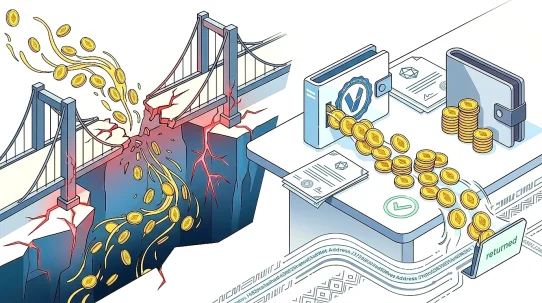
Kraken is now licensed to operate in Dubai. Its parent company, Payward, received preliminary broker-dealer and investment management authorization from the Virtual Asset Regulatory Authority (VARA). That means UAE clients get access to spot trading, margin trading, staking, OTC services. Kraken’s institutional platform, all through a locally supervised entity. This is a meaningful step for a firm that also has a U.S. IPO pending and just filed for a national trust bank charter.
Context
Dubai created VARA in 2022. The goal was simple: write clear rules for crypto businesses before most other governments even tried. It worked. The framework covers trading, custody, and advisory services. Firms know exactly what they need to do to get licensed. That clarity has pulled in real money and serious players.
Binance, Crypto.com, and OKX already hold VARA licenses. Ripple got VARA approval for its RLUSD stablecoin earlier this year. Animoca Brands secured a license too. VARA has also shown it will enforce the rules. In March, it ordered KuCoin to stop serving Dubai residents for operating without proper authorization. The message is clear: get licensed or get out.
Kraken joining this group matters. It’s one of the oldest and most recognized exchanges in the world. Its arrival signals that Dubai’s framework is mature enough to attract firms with serious compliance standards. Not just firms looking for an easy stamp.
The timing is also notable. Kraken filed for a U.S. IPO last November after raising $800 million at a $20 billion valuation. Payward also recently filed for a national trust bank charter from the U.S. Office of the Comptroller of the Currency. The Dubai license fits a clear pattern: Kraken is building a global, regulated footprint across multiple jurisdictions at once.
What Token Metrics Data Shows
Data as of May 21, 2026.
Token Metrics technicals on Bitcoin read bearish right now. The trend has flipped bearish, and BTC is trading inside its recent range, compressed near the lower end. Momentum is weak but not in freefall. Volatility is relatively contained, so the market isn’t pricing in a dramatic near-term swing. First support sits near $74,000. Next resistance is near $81,000. The broader crypto backdrop heading into this Kraken news is cautious, not panicked.
Bitcoin is trading near $77,000, off less than 1% on the day and down about 5% over the past week. A market-cap near $1.5 trillion means any macro shift still moves the whole space. That context matters for reading exchange expansion news: Kraken is building for the long cycle, not reacting to a short-term price spike.
Polymarket has the odds of Bitcoin dipping to $35,000 in May priced near 0.15%. Which is about $42,000 below current price. The market is not pricing in a catastrophic drop. That’s a stable backdrop for an exchange to be making licensing moves.
What’s New
Payward, Kraken’s parent company, received preliminary broker-dealer and investment management authorization from VARA. The authorization covers spot trading, margin trading, OTC services, staking, crypto transfers. Access to Kraken Prime, the exchange’s institutional platform.
UAE clients will connect to Kraken’s global order books spanning Europe, the United States, and Asia-Pacific. They can fund accounts and withdraw in dirhams through Payward FZCO, the locally regulated subsidiary. That dirham on-ramp is a practical detail that matters. It removes friction for UAE-based retail traders who don’t want to deal with currency conversion just to get started.
Kraken plans to expand the Dubai offering to include derivatives, lending, and new products for qualified clients. So this isn’t just a license to run a spot desk. It’s a foundation for a full-service operation.
Kraken Co-CEO Arjun Sethi was direct about why Dubai made sense. “Dubai wrote a rulebook for crypto before most jurisdictions even acknowledged the asset class,” he said. “That clarity is why real liquidity and institutional capital now sit in the UAE.” He added that UAE clients get the same order book and balance sheet as every other Kraken market. The difference, he said, is that the rules are written down and the supervisor is local.
That last point is worth sitting with. Kraken isn’t treating Dubai as a soft regulatory environment. It’s treating it as a model: clear rules, local oversight, no guesswork. That’s a very different posture than exchanges that set up offshore to avoid scrutiny.
What to Watch
- Full license conversion: Payward received preliminary authorization from VARA. Watch for the full, permanent license to be granted. Until that happens, the Dubai operation is still in a conditional phase.
- Derivatives and lending launch: Kraken said it plans to add derivatives and lending for qualified UAE clients. A public announcement of those products going live would confirm the Dubai office is scaling as planned.
- U.S. IPO progress: Kraken filed for a U.S. IPO last November. Any SEC update, roadshow announcement, or pricing news would be a signal that the global buildout is accelerating toward a public market event.
- OCC trust charter decision: Payward filed for a national trust bank charter with the U.S. Office of the Comptroller of the Currency. A grant or denial from the OCC would shape how Kraken handles institutional custody in the U.S., which is the other half of the global strategy.
- VARA enforcement posture: VARA has shown it will act against unlicensed firms. Watch whether the authority tightens requirements for existing licensees. Any new VARA rules could affect the cost and scope of Kraken’s Dubai operations.
- Bitcoin technicals: Token Metrics reads BTC as bearish right now, with first support near $74,000. If Bitcoin breaks below that level on heavy volume, exchange volumes across the board tend to compress. That would slow the revenue case for any new market expansion, Dubai included.
This article is for informational purposes only and does not constitute financial advice. Nothing here should be read as a recommendation to buy or sell any asset.
Continue your research: Use Token Metrics crypto market research tools to compare market context, risk signals, and related crypto news before making decisions.