


A Token Metrics Safety Guide
Table of Contents
Token Metrics analyzed thousands of on-chain transactions and user-reported incidents to build the definitive guide to transferring crypto between crypto wallets safely in 2026. The most common mistakes that cause permanent fund loss during crypto wallet transfers, the safety features modern crypto wallets now offer to prevent those mistakes, and the step-by-step practices every user should follow before hitting send. If you’ve ever hesitated before transferring crypto — worried about wrong addresses, wrong networks, or fees you didn’t expect — this guide is for you.
Transferring crypto between crypto wallets should be simple. In theory, it is: copy an address, enter an amount, confirm the transaction, and wait for the blockchain to process it. In practice, the multi-chain reality of crypto in 2026 introduces complications that trip up beginners and experienced users alike. Sending a token on the wrong network, pasting a slightly incorrect address, or underestimating gas fees can result in funds that are delayed, stuck, or permanently lost. The good news is that every one of these mistakes is avoidable — and modern crypto wallets are building increasingly powerful safeguards to protect you.
How Crypto Transfers Actually Work
Before diving into safety practices, it helps to understand what actually happens when you transfer crypto between crypto wallets. Unlike traditional bank transfers, crypto transactions are not processed by a central institution. Instead, they are broadcast to a decentralized network of nodes that validate the transaction according to the blockchain’s consensus rules and add it to the permanent, public ledger.

Token Metrics Daily Pulse
Get Crypto Insights Delivered Daily
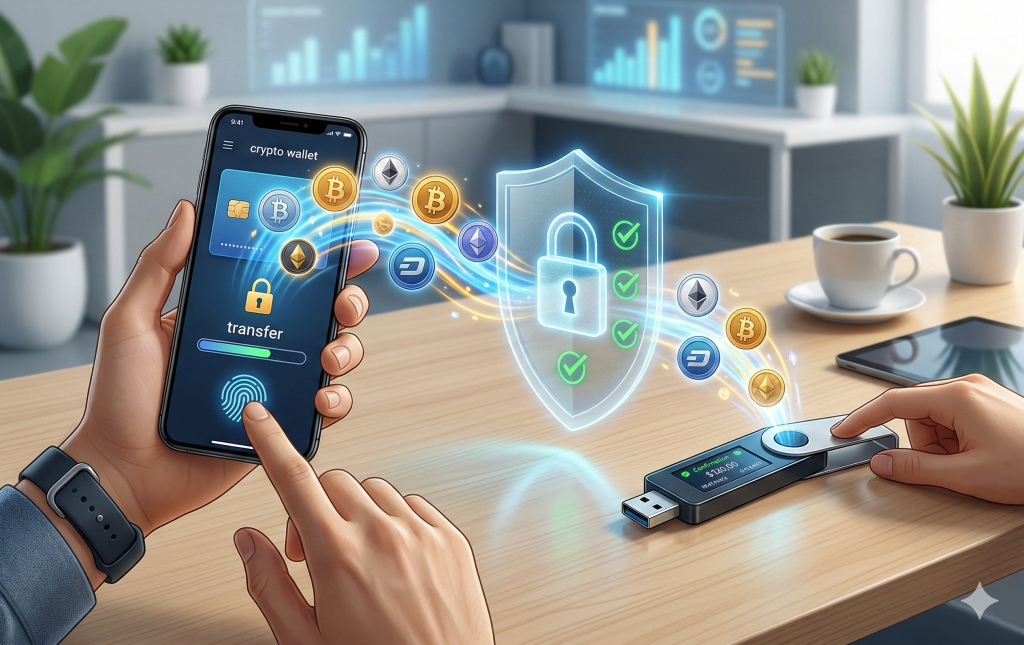
When you initiate a transfer, your wallet creates a transaction that specifies three things: the recipient’s address, the amount being sent, and a fee you’re willing to pay for the network to process the transaction. Your wallet then signs this transaction with your private key — proving that you own the funds — and broadcasts it to the network. Miners or validators confirm the transaction and include it in the next block, at which point the transfer is complete and irreversible.
That last word — irreversible — is the most important concept in crypto transfers. Unlike a credit card charge or a bank wire, a confirmed blockchain transaction cannot be undone. There is no dispute resolution, no chargeback mechanism, and no customer support team that can reverse a completed transfer. Once it’s confirmed, it’s final. This immutability is a core feature of blockchain technology, but it also means that every mistake is permanent.
The Most Common Transfer Mistakes and How to Avoid Them
The single most costly mistake in crypto transfers is sending tokens on the wrong network. In 2026, many popular tokens exist on multiple blockchains simultaneously. USDT, for example, is available on Ethereum, Tron, Solana, Arbitrum, BNB Chain, Avalanche, and several other networks. Each version of USDT lives on a different blockchain with different addresses and different transaction formats. If you send USDT on the Ethereum network to a crypto wallet address that only supports the Tron network — or worse, to a crypto wallet that doesn’t support that token at all — your funds can be lost permanently.
The solution is straightforward but requires attention: always verify that the sending crypto wallet, the receiving crypto wallet, and the token are all on the same network. If you’re sending ETH from your MetaMask to your Ledger, make sure both crypto wallets are set to the Ethereum mainnet — not Arbitrum, not Optimism, not Base. If you’re sending USDT, confirm that you’re using the same chain on both ends. Most modern crypto wallets now display the network prominently during the transfer process, but it’s your responsibility to verify.
The second most common mistake is address errors. Crypto addresses are long, complex strings of characters that are virtually impossible to verify by eye. A single wrong character sends your funds to a completely different address — one you don’t control and can never recover from. Never type a crypto address manually. Always copy and paste, and after pasting, verify at minimum the first four and last four characters of the address against the original. Clipboard malware that swaps addresses during copy-paste is a known attack vector, so this verification step is not optional.
The third mistake is underestimating or misunderstanding transaction fees. Every blockchain charges a fee for processing transactions, and these fees vary dramatically based on network congestion, transaction complexity, and the blockchain you’re using. Ethereum mainnet fees can spike during periods of high demand. Solana and Layer 2 networks like Arbitrum and Base typically offer much lower fees. Before initiating a transfer, check the estimated fee and make sure you have enough of the native token — ETH for Ethereum, SOL for Solana, BNB for BNB Chain — to cover it. If you don’t have enough for the fee, the transaction will fail and you may still lose the fee amount.
The Test Transaction: A Simple Habit That Saves Fortunes
The single best practice for crypto transfers is one that takes thirty seconds and costs a fraction of a dollar: the test transaction. Before sending any significant amount of crypto, send a small test amount first. Send one dollar’s worth. Wait for it to arrive. Confirm the receiving crypto wallet shows the correct balance on the correct network. Then, and only then, send the full amount.
This practice catches every major category of transfer error — wrong address, wrong network, incompatible token format — before any meaningful value is at risk. Professional traders, institutional custody operations, and treasury managers all use test transactions as standard protocol. There is no reason retail users shouldn’t do the same.
Yes, you’ll pay two transaction fees instead of one. On most networks in 2026, that additional cost is measured in cents. Compared to the potential loss of an entire transfer, it’s the best insurance money can buy.
Modern crypto Wallets Safety Features in 2026
The crypto wallets industry has learned from years of user mistakes and has built increasingly sophisticated safeguards into the transfer process. Understanding and using these features can dramatically reduce your risk of loss.
Address warnings are now standard in most major crypto wallets. When you enter a recipient address, the wallet checks whether that address has been flagged for malicious activity, whether it matches the expected format for the selected network, and whether you’ve sent to it before. Some crypto wallets now display a visual indicator — a color-coded badge or a verification checkmark — for addresses in your transaction history, making it easy to confirm you’re sending to a known destination.

Network auto-detection has improved significantly. Many crypto wallets now recognize when a recipient address belongs to a different network than the one currently selected and will either warn you or automatically suggest switching to the correct chain. This feature alone prevents a substantial percentage of wrong-network errors.
Transaction simulation is perhaps the most important safety innovation of recent years. Before you sign a transaction, the wallet simulates its execution and shows you exactly what will happen — which tokens will leave your crypto wallet, which tokens you’ll receive, and what the net effect on your balance will be. This is particularly valuable for DeFi transactions where smart contract interactions can be complex and opaque, but it’s increasingly useful for simple transfers as well. Crypto wallets like Rabby and the latest versions of MetaMask have made transaction simulation a core feature.
Sending limits and velocity checks allow you to set maximum transfer amounts or require additional confirmation for transactions above a certain threshold. Smart contract crypto wallets take this further with programmable rules — you could configure your wallet to require multi-signature approval for any transfer above a specific dollar amount, adding an institutional-grade security layer to personal transactions.
Transfer Fees: What You Need to Know
Transaction fees — often called gas fees — are the cost of having the blockchain process your transfer. These fees don’t go to the crypto wallets company or to the recipient; they go to the validators or miners who confirm your transaction on the network. Understanding fees helps you time your transfers for lower costs and avoid failed transactions.
Ethereum mainnet remains the most expensive network for transfers, with fees that can range from a few dollars during quiet periods to tens of dollars during high-demand events. Layer 2 networks built on top of Ethereum — including Arbitrum, Optimism, and Base — offer the same security guarantees with fees that are typically under a dollar. Solana transactions consistently cost fractions of a cent. BNB Chain and other alternative Layer 1 networks fall somewhere in between.
Most crypto wallets display estimated fees before you confirm a transaction, and many now offer speed options — slow, standard, and fast — that let you choose between lower cost and faster confirmation. For non-urgent transfers, selecting a slower speed can save meaningful amounts on high-fee networks.
One important detail: fees are paid in the native token of the blockchain, not in the token you’re sending. If you’re transferring USDC on Ethereum, you need ETH to pay the gas fee. If you’re transferring an SPL token on Solana, you need SOL. Make sure your crypto wallets have sufficient balance of the native token before initiating any transfer.
How Long Do Transfers Take?
Transfer speed varies by blockchain. Bitcoin transactions typically confirm within 10 to 60 minutes, depending on network congestion and the fee you’ve paid. Ethereum mainnet transactions usually confirm within 15 seconds to a few minutes. Solana transactions confirm in under a second. Layer 2 networks like Arbitrum and Base process transactions in seconds with final settlement back to Ethereum happening over a longer period.
Exchange withdrawals can add additional time because the exchange itself may batch transactions or implement security holds before broadcasting your transfer to the blockchain. A withdrawal from Binance or Coinbase might take anywhere from a few minutes to several hours depending on the exchange’s internal processing and security review.
If a transaction seems stuck, the most common cause is an insufficient gas fee on networks like Ethereum. Most crypto wallets offer the option to speed up a pending transaction by resubmitting it with a higher fee, which incentivizes validators to prioritize it.
Token Metrics Verdict: Transfer Safely, Transfer Smart
Transferring crypto between crypto wallets is a routine action that every crypto user performs regularly, and there’s no reason it should be a source of anxiety. The transfers that go wrong almost always go wrong because of avoidable mistakes — wrong network selection, unverified addresses, and insufficient fee balances. Every one of these errors has a simple, free prevention: slow down, verify, and test.
Token Metrics recommends three non-negotiable practices for every transfer. First, always send a small test transaction before any significant amount. Second, triple-check the network and address before confirming. Third, make sure you have sufficient native tokens to cover gas fees. Follow these three rules consistently and the risk of loss during transfers drops to nearly zero.
The crypto wallets ecosystem in 2026 is building better safeguards every month — address warnings, network auto-detection, transaction simulation, and programmable spending limits are making transfers safer than ever. Use these tools. Trust the process. And never rush a transaction. Your crypto will arrive safely if you take the time to send it correctly.
In 2026, users of crypto wallets can enhance the security of their transactions by leveraging advanced features designed to minimize risks. As the ecosystem evolves, address warnings and network auto-detection provide critical safeguards against common errors. Additionally, utilizing transaction simulation and setting programmable spending limits can further ensure the safe transfer of funds. By adhering to these best practices and utilizing available tools, individuals can confidently navigate the complexities of transferring assets between crypto wallets without jeopardizing their investments.
Powered by Token Metrics AI | tokenmetrics.com
Want more insights like this?
The Daily Pulse delivers crypto market insights, top token picks, and on-chain signals — every morning, completely free.
No spam. Join 10,000+ crypto investors. Unsubscribe any time.