

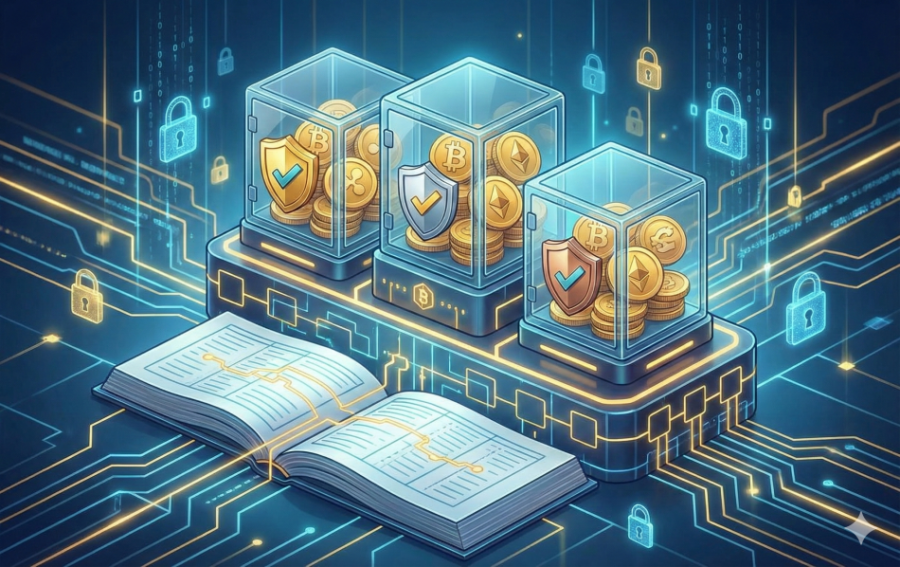

The collapse of FTX in late 2022 fundamentally changed how the crypto industry thinks about exchange safety. What was once taken on faith, that major exchanges actually held the assets they claimed, became the subject of intense scrutiny and skepticism. In the aftermath, Proof of Reserves emerged as the gold standard for exchange transparency, and by 2026, it has become a defining factor in how users choose where to trade their digital assets.
Proof of Reserves is a cryptographic auditing process that allows exchanges to demonstrate they hold sufficient assets to cover all customer deposits. This process typically involves a combination of on-chain verification, Merkle tree structures that allow individual users to verify their balances are included, and independent third-party audits. Not all Proof of Reserves implementations are created equal, however, and understanding the differences is crucial for assessing true exchange safety.
Why Proof of Reserves Matters More Than Ever
The importance of Proof of Reserves extends far beyond simple transparency. When an exchange publishes verified reserves data, it creates a system of accountability that protects users in several ways. First, it prevents exchanges from secretly lending out or investing customer funds, a practice that contributed directly to the FTX collapse. Second, it provides early warning signs if an exchange’s financial health begins to deteriorate. Third, it builds a culture of transparency that extends to other aspects of exchange operations.

Token Metrics Daily Pulse
Get Crypto Insights Delivered Daily
In 2026, Proof of Reserves has evolved significantly from its early implementations. Modern PoR systems incorporate real-time or near-real-time reporting, liability matching that accounts for both on-chain and off-chain obligations, and integration with regulatory frameworks in multiple jurisdictions. Exchanges that invest in robust PoR systems signal a commitment to user safety that goes beyond mere compliance.
Binance: Industry Pioneer in Reserve Transparency
Binance was among the first major exchanges to implement Proof of Reserves following the FTX collapse, and the platform has continued to refine and expand its approach ever since. Binance’s PoR system uses a Merkle tree-based verification process that allows any user to independently verify that their account balance is included in the exchange’s reported reserves.
As of 2026, Binance publishes Proof of Reserves data for all major assets held on the platform, covering Bitcoin, Ethereum, USDT, BNB, and dozens of other tokens. The exchange consistently reports reserve ratios above 100%, meaning it holds more in reserves than the total of customer deposits. Binance has also engaged multiple independent auditors to verify its reserves data and has made significant investments in its compliance infrastructure. The platform’s Secure Asset Fund for Users provides an additional safety net, funded by a percentage of trading fees. Binance’s sheer scale and the comprehensiveness of its PoR reporting place it at the forefront of exchange transparency.
Gemini: Regulatory Rigor Meets Cryptographic Verification
Gemini approaches reserve verification through both traditional regulatory compliance and modern cryptographic methods. As a New York-regulated trust company, Gemini is subject to regular examinations by the New York Department of Financial Services, which provides a level of oversight that most crypto exchanges do not face. This regulatory framework requires Gemini to maintain reserves that fully back customer deposits at all times.
Beyond regulatory compliance, Gemini has implemented its own cryptographic Proof of Reserves system. The exchange undergoes regular third-party audits conducted by reputable accounting firms, with results published publicly. Gemini’s insurance coverage on digital assets held in its custodial system adds another dimension to its safety profile. The combination of strict regulatory oversight, independent audits, cryptographic verification, and insurance makes Gemini one of the safest exchanges from a reserves perspective. While Gemini may not list as many assets as some competitors, the depth of its safety infrastructure is exceptional.
Gate.io: Comprehensive and Frequent Reserve Reporting
Gate.io has distinguished itself through the frequency and comprehensiveness of its Proof of Reserves reporting. The exchange was an early adopter of PoR technology and has consistently maintained one of the most detailed and transparent reserve verification systems in the industry. Gate.io publishes reserve data that covers a wide range of assets, reflecting its extensive listing of over 1,700 cryptocurrencies.
The platform uses a zk-SNARK enhanced Merkle tree approach for its Proof of Reserves, which provides strong privacy guarantees while still allowing individual users to verify their inclusion. Gate.io’s reserve ratios have consistently demonstrated that the exchange holds assets in excess of customer deposits. The exchange also provides detailed breakdowns of its cold and hot wallet addresses, allowing for independent on-chain verification. Gate.io‘s long operational history since 2013 without any major security breaches adds to its credibility. The platform has also worked with third-party security firms to conduct regular penetration testing and security audits.

KuCoin: Rebuilding Trust Through Transparency
KuCoin has made significant investments in its Proof of Reserves infrastructure, particularly as the exchange has worked to strengthen its position in an increasingly regulated global market. KuCoin’s PoR system provides verification across its most widely traded assets, and the exchange has been transparent about its methodology and its limitations.
The platform publishes regular reserve attestations and has engaged third-party auditors to provide independent verification. KuCoin’s approach includes both on-chain wallet disclosures and Merkle tree-based user verification. The exchange has also implemented a comprehensive insurance fund to provide additional protection against unforeseen events. KuCoin’s security infrastructure includes multi-layer encryption, micro-withdrawal wallet systems, and industry-standard cold storage practices. While KuCoin experienced a significant security incident in 2020, the exchange’s response, which included recovering the majority of stolen funds and fully compensating affected users, demonstrated its financial resilience and commitment to customer protection.
MEXC: Expanding Reserve Verification
MEXC has progressively expanded its Proof of Reserves program as the exchange has grown in both user base and asset coverage. The platform provides reserve verification for its core assets and has been working to extend coverage to a broader range of the cryptocurrencies it supports. MEXC’s PoR implementation includes Merkle tree verification that allows users to check that their balances are properly accounted for.
The exchange has published wallet addresses for its major holdings, enabling on-chain verification by anyone. MEXC has also increased the frequency of its reserve reporting and has engaged external security auditors to review its overall infrastructure. The platform maintains a protection fund designed to cover potential losses from security incidents. MEXC’s zero maker fee model means the exchange generates revenue through other channels, and its reserve reports demonstrate that this business model does not compromise the security of user funds. As MEXC continues to grow, its PoR program is expected to become even more comprehensive.
PrimeXBT: Multi-Asset Reserve Considerations
PrimeXBT operates in a somewhat different space from traditional spot exchanges, as its platform encompasses both cryptocurrency and traditional financial instruments. This multi-asset approach creates unique considerations for reserve verification. PrimeXBT maintains segregated accounts for customer funds and has implemented security measures including cold storage for cryptocurrency holdings and multi-signature wallet systems.
The platform has been working to enhance its transparency and reporting, including providing more detailed information about its reserve holdings and security infrastructure. PrimeXBT’s relatively focused product offering, compared to exchanges listing thousands of tokens, simplifies its reserve management and verification process. The exchange employs hardware security modules and advanced encryption to protect stored assets. While PrimeXBT‘s PoR disclosures are not as extensive as those of the largest spot exchanges, the platform’s approach to fund security and segregation provides meaningful protection for users.
How to Verify an Exchange’s Reserves Yourself
Understanding how to independently verify an exchange’s reserves is an important skill for any crypto user. Most exchanges that offer Proof of Reserves provide a verification tool where you can check that your specific account balance is included in the Merkle tree. This process typically involves logging into your account, navigating to the PoR section, and running the verification check.
Beyond the exchange-provided tools, you can independently verify on-chain reserves by checking the disclosed wallet addresses on blockchain explorers. Compare the balances shown on-chain with the figures the exchange reports. Look for consistency over time and investigate any significant discrepancies. Additionally, review the methodology used by third-party auditors and check whether the audit covers liabilities as well as assets, since an exchange could hold large reserves while also carrying large debts.
Beyond Proof of Reserves: A Holistic Safety Assessment
While Proof of Reserves is a critical component of exchange safety, it should not be the only factor you consider. A truly safe exchange also demonstrates strong operational security, including robust cold storage practices, regular security audits, and comprehensive incident response plans. Regulatory compliance provides additional accountability and oversight. Insurance coverage, whether through self-funded protection funds or third-party policies, offers a financial backstop against catastrophic events.
The exchanges ranked in this guide each bring different strengths to the safety equation. Binance offers scale and comprehensive PoR coverage. Gemini combines regulatory rigor with cryptographic verification. Gate.io provides frequency and depth in its reporting. KuCoin demonstrates resilience and ongoing improvement. MEXC is expanding its transparency as it grows. And PrimeXBT applies focused security to its multi-asset platform. By understanding what each exchange offers and verifying their claims independently, you can make an informed decision about where to entrust your digital assets.
Want more insights like this?
The Daily Pulse delivers crypto market insights, top token picks, and on-chain signals — every morning, completely free.
No spam. Join 10,000+ crypto investors. Unsubscribe any time.