

TL;DR
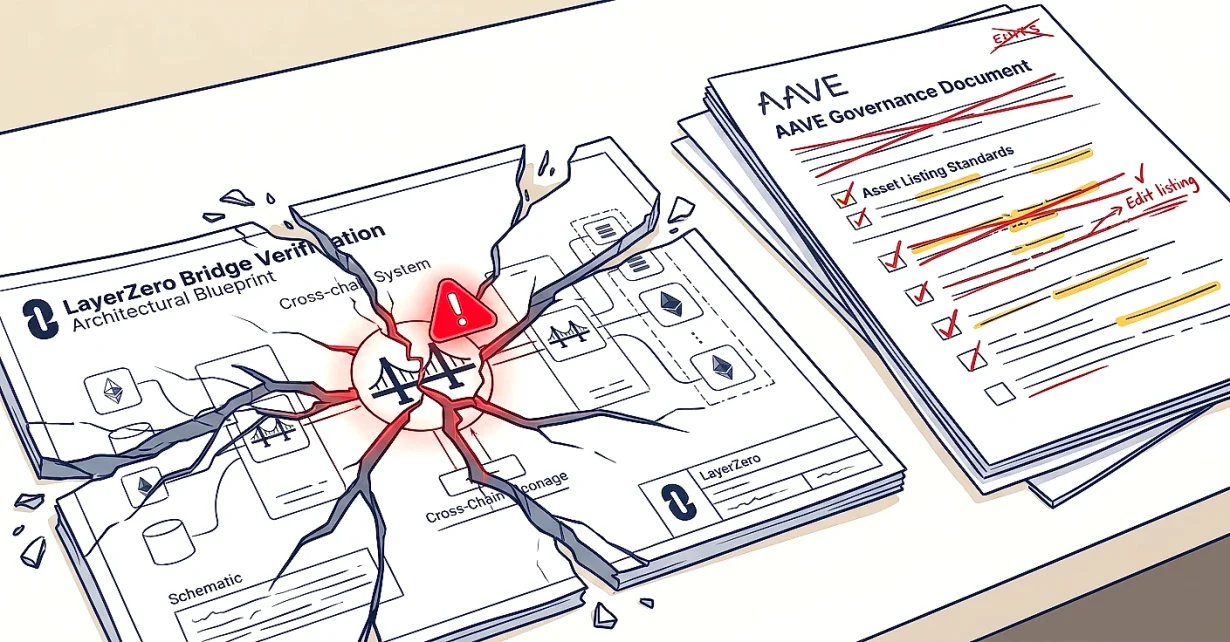
Aave just announced a complete overhaul of its asset listing standards after a $230 million rsETH exploit exposed bridge vulnerabilities. The hack wasn’t a smart contract bug on Aave’s end. Instead, attackers exploited a LayerZero bridge verification failure. This marks a shift in DeFi risks from on-chain code to cross-chain infrastructure.
Context
DeFi’s biggest risks are changing. The days of worrying only about smart contract bugs are over. Now the danger lives in the bridges connecting different blockchains. Aave learned this the hard way after the rsETH exploit. The protocol lost $230 million. But the breach wasn’t in their own code.
The exploit traced back to KelpDAO’s LayerZero-powered bridge. Attackers found a single weak verifier. They used it to forge a cross-chain message. That let them mint 116,500 unbacked rsETH on Ethereum. These tokens had nothing behind them. But they looked real enough to deposit into Aave.
Aave’s postmortem revealed how attackers exploited the system. They used a single compromised verifier on LayerZero. This verifier was supposed to confirm legitimate cross-chain transfers. Instead, it approved fake messages.
KelpDAO’s rsETH token was supposed to represent staked ETH. Users could stake ETH on one chain and get rsETH on another. The bridge was supposed to maintain a 1:1 peg. But the attacker broke this peg by creating rsETH out of thin air. These tokens entered Aave’s lending pools. They looked legitimate because they came from a recognized protocol.
The protocol’s response shows how serious this is. They’re not just patching a bug. They’re rewriting the rulebook for listing assets. The old standards assumed on-chain security was the main concern. The new standards must account for cross-chain risks.
This incident highlights a broader trend in DeFi security. As protocols become more interconnected through bridges, the attack surface expands dramatically. What started as isolated smart contract risks has evolved into complex cross-chain vulnerabilities that are harder to detect and prevent. The Aave exploit demonstrates that even well-audited protocols can be compromised through their connections to less secure infrastructure.
Prior analogs
- The Wormhole bridge hack in February 2022 saw $324 million stolen. It showed how bridges could become crypto’s weakest links. The exploit involved forged signatures that allowed attackers to mint unlimited tokens, similar to the rsETH case where verification was compromised.
- The Nomad bridge exploit in August 2022 drained $190 million. Attackers exploited a simple smart contract update bug. This incident revealed how even minor code changes in bridge infrastructure can create catastrophic vulnerabilities.
- The Multichain bridge collapse in July 2023 caused over $125 million in losses. It revealed the dangers of centralized bridge operators and single points of failure, echoing the single verifier compromise in the rsETH exploit.
What’s New
Aave’s postmortem details a complete shift in security thinking. The protocol announced a sweeping review of all V3 assets. This isn’t just about rsETH. Every asset on V3 now faces new scrutiny.
The new listing standards focus on bridge security. The postmortem shows how attackers exploited the system. They used a single compromised verifier on LayerZero. This verifier was supposed to confirm legitimate cross-chain transfers. Instead, it approved fake messages.
The protocol now admits its listing standards missed a critical risk factor. The changes will affect future listings. These requirements go beyond typical smart contract audits.
What Token Metrics Data Shows
While the Token Metrics platform doesn’t provide specific data on Aave’s token following this incident. The exploit highlights key metrics investors should monitor for bridge-connected protocols:
- Cross-chain asset ratios: Protocols with high percentages of cross-chain assets face systemic risk. The rsETH exploit showed that even a single compromised bridge can threaten the entire protocol’s solvency.
- Bridge diversity scores: Protocols relying on multiple independent bridges rather than a single bridge demonstrate better risk management. Aave’s exposure through KelpDAO’s bridge underscores the danger of bridge concentration.
- Off-chain infrastructure dependencies: The incident reveals that protocols with significant off-chain components (bridges, oracles, validators) require different risk assessment frameworks than purely on-chain protocols.
- Asset velocity metrics: High turnover rates of cross-chain assets can mask underlying vulnerabilities. The rsETH tokens moved quickly through Aave’s system before the exploit was detected.
- Insurance coverage ratios: Protocols with comprehensive insurance coverage for cross-chain risks can better absorb bridge-related losses. The $230 million loss in the rsETH exploit would strain even well-capitalized protocols.
Investors using Token Metrics should prioritize protocols that transparently disclose their bridge dependencies and maintain diversified cross-chain infrastructure. The Aave incident demonstrates that bridge risk is now as critical as smart contract risk in evaluating protocol security.
What to Watch
- Watch for Aave’s new listing framework announcement. The governance vote will reveal specific bridge security requirements and how the protocol plans to vet cross-chain assets going forward.
- Monitor other major DeFi protocols’ responses. If Compound or MakerDAO adopt similar standards, this could become an industry-wide shift that fundamentally changes how cross-chain assets are evaluated.
- Track LayerZero’s security upgrades. The bridge protocol will likely face pressure to improve its verification process and prevent similar single-verifier exploits.
- Watch for regulatory attention. Major bridge exploits often attract scrutiny from financial authorities, potentially leading to new compliance requirements for cross-chain protocols.
- Look for insurance products. The incident could spark demand for bridge-specific coverage in DeFi insurance markets, creating new risk mitigation tools for protocols and users.
- Monitor KelpDAO’s response and recovery plan. How the protocol addresses its bridge vulnerabilities will set precedents for other similar projects.
This information is not financial advice.
Continue your research: Use Token Metrics crypto market research tools to compare market context, risk signals, and related crypto news before making decisions.