

Signal Snapshot
- ARB, the token of Arbitrum where the exploit occurred, is down about 3%. It is showing bearish technicals ahead of a large token unlock.
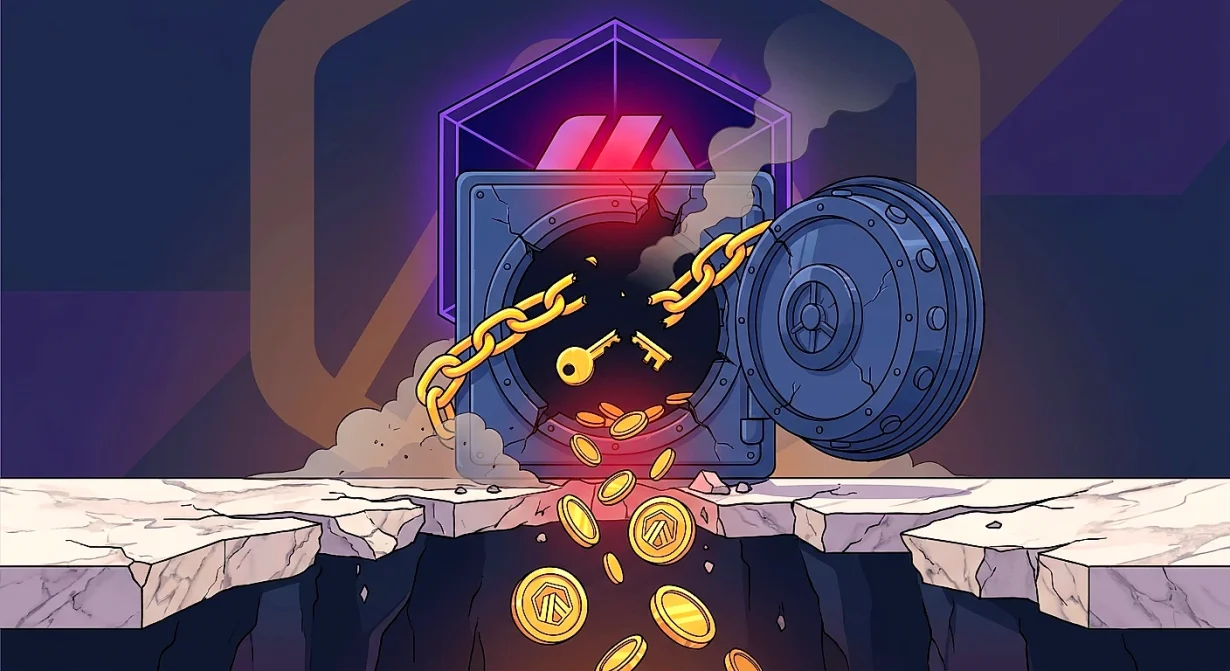
- Ostium, a decentralized perpetual futures exchange on Arbitrum, lost over $20 million. This was due to a suspected oracle private key compromise.
- Security firms flagged strange outflows ranging from $18M to $23M from the OstiumVault.
- The attacker changed price feeds to open and close trades for profit. This drained USDC from the vault.
- Ostium paused all trading and confirmed an issue with its OLP vault.
- This hack highlights risks in the DeFi world’s price systems.
Key Takeaways
- Ostium lost over $20M in an exploit on Arbitrum.
- ARB faces selling pressure from a token unlock.
- Oracle risks are still a big problem for DeFi.
What Happened
Ostium, a decentralized perpetual futures exchange. Was hacked on the Arbitrum network in what appears to be a private key breach of its oracle signer. The incident was first flagged by multiple crypto security firms, including Blockaid, DefimonAlerts, and CyversAlerts, which detected suspicious outflows from the vault. Initial estimates put the loss between $18 million and $23 million, with most reports settling around $20 million.
The protocol’s official X account quickly confirmed an “issue” with its OLP vault following the security alerts. Ostium immediately paused all trading while the team began investigating the incident. The OLP vault serves as the protocol’s settlement layer, where users deposit USDC to open trades on the platform.
Ostium allows users to trade perpetual futures of stocks, commodities, and forex. The attacker manipulated the oracle by feeding self-signed favorable prices to open and immediately close trades at a profit. In one example transaction highlighted by Decurity, the attacker drained almost $12 million USDC from the OstiumVault using this method.
Why It Matters
This exploit shows a key flaw in DeFi protocols. They rely on oracle systems that link on-chain contracts to real-world prices. When these oracles fail, entire protocols can lose funds. The Ostium incident is very worrisome. It happened on Arbitrum, one of the top layer-2 networks in the Ethereum world.
For investors, this hack shows the risks that can hurt even strong networks. Ostium may be a new protocol, but its failure hurts trust across all of Arbitrum. The attacker manipulated price feeds to drain funds, raising concerns about DeFi platform safety.
The event also shows the clash between decentralization and security. Oracle signers are a point of centralization. If they are hacked, the whole system can fail. This creates a tough choice for protocols. They must balance speed with strong safety steps. Investors should know that even well-built protocols can be hit by smart attacks on these key parts.
Token Metrics View
ARB now trades around $0.088. It has fallen about 3% in the past day. The token-market signal shows a bearish bias. Token Metrics technicals show weakening strength. The price sits in the middle of its recent range. This shows that traders are unsure.
Momentum indicators show weakness with the current reading around 40. Trend strength measures stand at 26, indicating a lack of strong directional movement. These numbers point to a lack of strong trend. Momentum tools show the price is not too high or too low. This leaves room for moves in either direction. Trend strength tests show the current bearish move lacks force. The main trend is not set yet.
Oddly, longer-term trend signs still point up. This suggests the current weakness may not last. But a big event is coming. Nearly $8.6 million in ARB tokens will unlock on July 16. This will add more tokens to the market. It will likely create more selling pressure. Even so, ARB has risen about 15% in the past week. It has shown strength that may be tested by the hack and token unlock. According to Token Metrics Daily Pulse coverage, smart-money netflow has been mixed, reflecting the market’s uncertainty.
Market Context
The Ostium hack is part of a larger trend of oracle exploits that have hurt DeFi in 2026. These events show that price tricks are still a top way to attack DeFi. Oracle hacks have grown more common. Attackers find new ways to break the systems that give key price data to smart contracts.
Investors have become more wary of security breaches, especially those hitting core parts like oracles. Each successful hack erodes trust in all of DeFi, not just the hit protocol. The market often reacts with price drops in tokens linked to the harmed network. This happened with ARB after the Ostium news.
This event adds to a long list of DeFi security problems. It shows that private key safety is still a weak spot. When oracle signers are hacked, whole protocols are at risk. This is true even if their smart contracts are well-made. This wide risk forces protocols to use better safety steps. These include multi-signature plans, regular key changes, and maybe decentralized oracle groups.
Risks to Watch
- More oracle hacks hitting other DeFi protocols on Arbitrum and other networks.
- Movement of the stolen funds through mixers or decentralized exchanges.
- More selling pressure on ARB as the token unlock nears and market mood worsens.
- Bad effects for other DeFi apps running on Arbitrum.
- Possible regulatory checks or actions if oracle hacks keep happening this often.
What to Watch Next
- Official posts from Ostium about payback plans and safety upgrades.
- On-chain tracking of the stolen funds to spot any money laundering tries.
- ARB price moves around the July 16 token unlock for signs of sell-off or strength.
- Safety updates or rule changes from other protocols after this event.
- New steps in oracle safety tech or industry rules for key handling.
This article is for informational purposes only and does not constitute investment advice.
Sources / Data Used
- Ostium loses over $20M in oracle exploit on Arbitrum
- Token Metrics data on ARB price and technical indicators