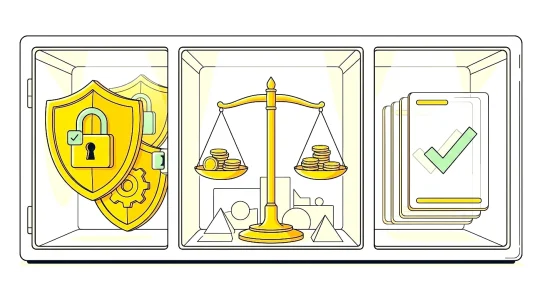



Crypto staking platform and custody-fit checker
Use these prompts to create a review checklist. This tool does not connect accounts, recommend a provider, predict outcomes, or verify current availability or support.
Important: Do not enter seed phrases, private keys, account credentials, or personal data. Check official documentation and obtain qualified advice where appropriate.
Disclosure: Token Metrics may earn compensation when readers use certain partner links. Compensation does not determine editorial coverage. This is general educational information, not investment, legal, tax, custody, compliance, or engineering advice.
Sources checked
Start free with the Daily Pulse
Staking-platform hub · Methodology · Workflow comparison · Custody-fit checker
Prepared by the Token Metrics Editorial Team using the official sources listed below. Product terms, eligibility, limits, fees, and protocol rules can change; confirm current details before acting.
How to use: Choose the custody and workflow answers that match your real plan. Run the checker. Read the visible result as a review list, not a recommendation. It does not use live yield, personal balances, or a safety score.
How to read the output
A solo or node result means the user should study validator keys, hardware, clients, updates, uptime, recovery, penalties, and exit. A pooled or liquid result means the user should map contracts, operators, governance, token price, and other apps. A custodial result means the user should review account security, provider custody, fees, eligibility, and withdrawal terms. A wait result is valid when the user cannot explain the path.
Method
The checker uses stated preferences, not a provider rank. It separates control, technical burden, and liquidity. It does not predict rewards. The method follows the cluster policy: compare workflow risks in plain language and send the user to current primary docs.
Worked example
A user wants self-custody, cannot run a server, and may need to sell soon. The checker may point toward pooled or liquid-staking research. That is not an approval. The user must still review token liquidity, contract risk, fees, wallet signing, and exit. If those risks are unclear, holding without staking is a sound next step.
Limits, privacy, and safety
The checker runs in the page and does not need a wallet address, seed phrase, private key, balance, name, or email. Do not enter secrets into any staking tool. Output can be wrong if an answer is wrong or a protocol changes. Confirm the current official docs. Start small and test the exit before adding more.
Next steps
- Open the method page and the official docs for the shown workflow.
- Draw the custody, contract, token, and exit path.
- Check fees, records, and support.
- Use a small test or decide not to stake.
Frequently asked questions
Does the checker rank platforms?
No. It creates a custody and workflow review list.
Does it use my wallet data?
No. It does not need an address or balance.
Does the result guarantee safety or yield?
No. It makes no guarantee and uses no live rate.
What if no path feels clear?
Choose the wait or no-staking option and learn the risks before acting.
Sources
These primary and public-interest sources were checked on July 13, 2026. Product terms can change, so confirm the current page before you build or move assets.
Continue: staking workflow guide · methodology · comparison · custody-fit checker
Practical review notes
Use the result as a note
Copy the result into your own review note. Add the date and the docs you checked. Mark each open item. A green check should mean you saw proof, not that a tool said the path is safe. If a key fact changes, clear the old check and review it again.
Release record
Read the result as a prompt. It is not a score. Check one answer at a time. Open the linked source. Write down what you found. If a fact is missing, stop. If an exit is unclear, stop. If keys are not safe, stop. Ask a skilled person for help. Use a small test first. Save no secret in the tool. Return when the facts change. A new answer may change the checklist. That is normal. The goal is a clear next step, not a fast yes. Print the list if useful. Add the date by hand. Add each source used. Mark a fact that may change. Keep the list with your own notes. Do not send it with wallet data. Read it again before a deposit. Read it again before an exit. A short pause can reveal a bad choice.