

A Token Metrics Comparison Guide
Table of Contents
Token Metrics analyzed the full spectrum of crypto wallets available in 2026 using our evaluation framework, scoring platforms across security architecture, multi-chain support, DeFi compatibility, user experience, staking capabilities, and overall reliability. The result is the most comprehensive hot wallet vs cold wallet comparison and wallet ranking available this year. Whether you’re choosing your first crypto wallet or upgrading your existing setup, this analysis will help you make the right decision for your portfolio and your trading style.
“Which crypto wallet is best?” is one of the highest-traffic questions in the entire digital asset space, and for good reason — your wallet is the single most important piece of infrastructure in your crypto journey. It determines how you store your assets, how you interact with decentralized applications, how secure your holdings are, and how much control you ultimately have over your financial sovereignty. Choosing the wrong wallet can cost you money, time, or in the worst case, your entire portfolio. Choosing the right one can make every other aspect of your crypto experience smoother and safer.
Hot Wallets Explained: Speed, Access, and Convenience
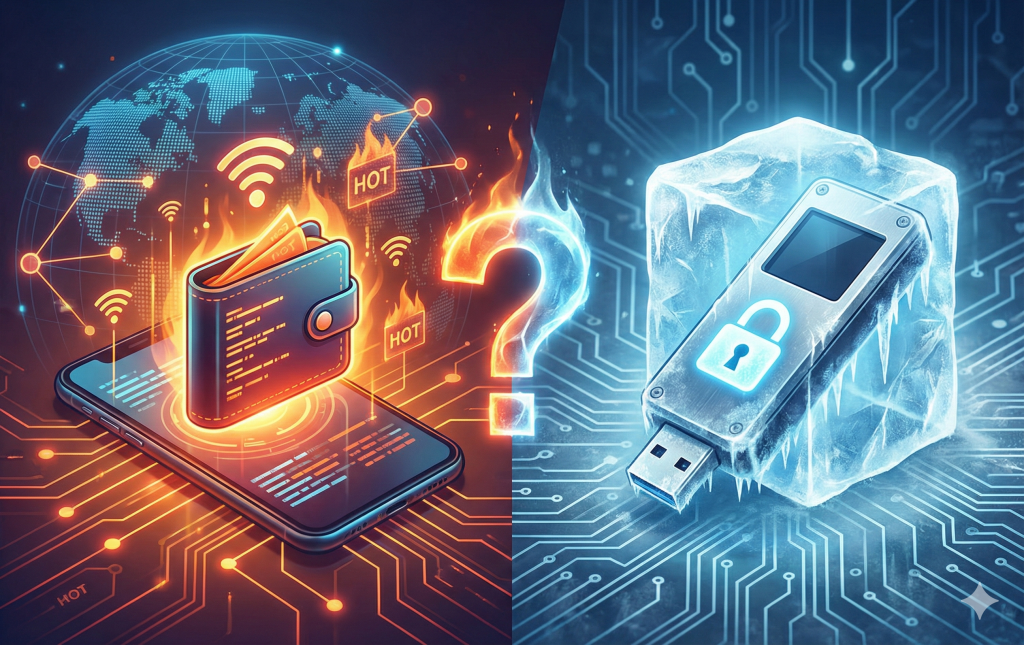
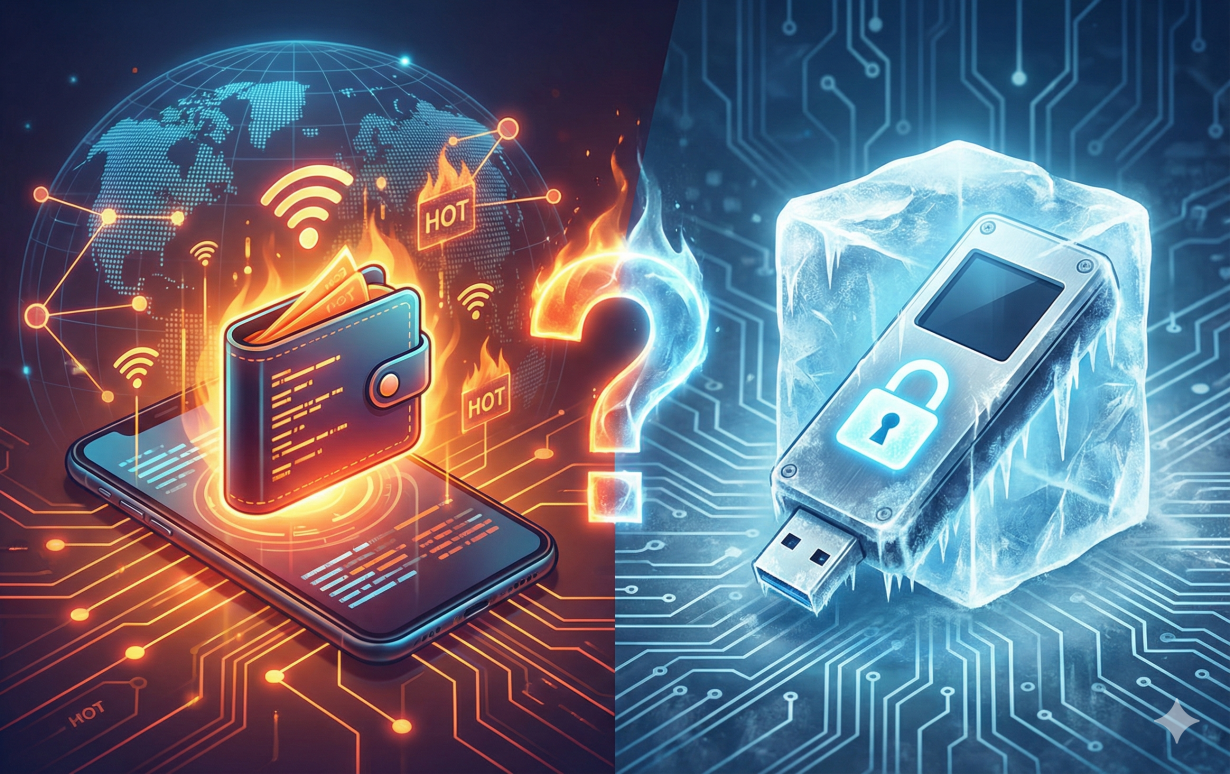
Understanding the different types of crypto wallets is crucial for any user in the digital asset space. You must consider what fits your needs best, whether it’s a hot wallet for convenience or a cold wallet for maximum security.

Token Metrics Daily Pulse
Get Crypto Insights Delivered Daily
Your choice of a crypto wallet can greatly affect your overall experience in the cryptocurrency market. Make sure to research thoroughly before settling on a specific type.
Evaluating the right crypto wallet is essential; you want one that aligns with your trading habits and security needs.
Many users opt for a combination of both types of wallets—a hot wallet for everyday transactions and a cold wallet for long-term storage of assets.
In conclusion, your crypto wallet choice can significantly influence your trading efficiency and security. Choose wisely based on your needs.
When you decide on a crypto wallet, think about factors such as how often you trade and what level of security you require for your assets. A hot wallet enables quick transactions, while a cold wallet protects your long-term investments.
A hot wallet is any crypto wallet that maintains an active connection to the internet. This includes mobile wallet apps on your phone, browser extension wallets like MetaMask or Phantom, and desktop wallet applications. Hot wallets are designed for convenience and accessibility — they allow you to send, receive, and interact with crypto assets in seconds, connect to decentralized applications with a single click, and manage your portfolio from anywhere with an internet connection.
The primary advantage of hot wallets is usability. If you’re swapping tokens on a decentralized exchange, minting an NFT, providing liquidity to a DeFi protocol, or simply sending crypto to a friend, a hot wallet is the tool you’ll reach for. The transaction flow is fast, the interfaces are intuitive, and the ecosystem of supported applications is enormous. In 2026, the leading hot wallets support dozens of blockchain networks, hundreds of decentralized applications, and thousands of tokens — all from a single interface.
The trade-off is security. Because hot wallets operate on internet-connected devices, they’re exposed to a wider range of threats than their offline counterparts. Malware on your device could potentially access private keys. Phishing attacks can trick you into signing malicious transactions. Fake wallet apps distributed through unofficial channels can steal your funds the moment you import your seed phrase. None of these risks are unique to hot wallets, but the internet connectivity that makes them convenient also makes them more vulnerable.
For serious investors, understanding the benefits of a crypto wallet strategy can make all the difference in asset management.
Utilizing a well-planned crypto wallet approach allows you to efficiently manage your digital holdings.
Popular hot wallets in 2026 include MetaMask for Ethereum and EVM chains, Phantom for Solana, Trust Wallet for multi-chain mobile access, Rabby for smart transaction previews, and the OKX Wallet for integrated CeFi-DeFi bridging. Each serves a slightly different audience, but all share the common trait of prioritizing accessibility and DeFi connectivity.
Cold Wallets Explained: Maximum Security for Long-Term Storage
Understanding the roles of hot wallets and cold wallets in your crypto wallet strategy is essential for maximizing your security and usability.
Using a secure crypto wallet setup allows you to manage your digital assets effectively while minimizing risk.
In the world of cryptocurrency, having the right crypto wallet is pivotal in ensuring the safety of your funds.
By using both a hot wallet and a cold wallet, you can enjoy the benefits of both speed and security in managing your crypto wallet.
Make sure to educate yourself about the different features of each crypto wallet to optimize your trading strategies.
Exploring the various options available in crypto wallets can provide insight into which type suits your trading goals.
A cold wallet is any crypto wallet that stores private keys in an environment completely disconnected from the internet. The most common form of cold wallet is a hardware wallet — a dedicated physical device purpose-built to generate, store, and use private keys without ever exposing them to an online environment. When you sign a transaction with a hardware wallet, the cryptographic signing happens on the device itself. Your private keys never leave the secure chip, never touch your computer’s memory, and never traverse the internet.
Evaluate your needs carefully when selecting a crypto wallet to ensure you have the best tools for your trading activities.

Your crypto wallet’s functionality will directly impact your ability to navigate the ever-changing landscape of digital assets.
This air-gapped architecture makes cold wallets extraordinarily resistant to the remote attacks that threaten hot wallets. Malware on your computer cannot extract keys from a hardware device. Phishing sites cannot access your private keys because those keys physically cannot leave the hardware wallet. Even if your computer is completely compromised, a hardware wallet transaction requires physical confirmation on the device — a button press that no hacker can simulate remotely.
The leading cold wallets in 2026 each bring distinct advantages. Ledger, the market leader with over six million devices sold, offers broad multi-chain support, a polished companion app, and integration with most major DeFi platforms through Ledger Live. Trezor pioneered the hardware wallet category and continues to differentiate through its fully open-source firmware and hardware design, allowing independent security researchers to audit every component. NGRAVE takes cold storage to its extreme with a fully air-gapped design — no USB, no Bluetooth, no WiFi — communicating exclusively through QR codes. BitBox, engineered in Switzerland, focuses on Bitcoin-centric security with a minimalist design philosophy that reduces attack surface by eliminating unnecessary features.
The trade-off with cold wallets is convenience. Every transaction requires physical interaction with the device. Connecting to DeFi applications requires additional steps compared to a browser extension wallet. And the upfront cost — typically between $60 and $400 depending on the device — adds a barrier that free software wallets don’t have. For active traders who execute dozens of transactions daily, using a cold wallet for every interaction would be impractical.
Ultimately, a well-chosen crypto wallet will provide the balance of ease and security necessary for effective asset management.
Your crypto wallet selections should reflect your trading style and security requirements for the best results.
Do You Need Both? The Two-Wallet Strategy
The overwhelming consensus among security professionals, experienced traders, and institutional custody experts in 2026 is that most active crypto users should use both a hot wallet and a cold wallet. This two-wallet strategy mirrors the approach most people already take with traditional finances — a checking account for daily spending and a savings account for long-term storage.
Here’s how it works in practice. Your cold wallet — a Ledger, Trezor, NGRAVE, or BitBox — holds the majority of your portfolio. These are the assets you’re holding long-term, the Bitcoin you’re accumulating, the ETH you’re staking, and any significant positions you don’t plan to touch frequently. Your cold wallet is your vault. You interact with it infrequently, and every interaction requires deliberate physical action.
Your hot wallet — MetaMask, Phantom, Trust Wallet, or your preferred mobile or browser wallet — holds only the funds you need for active use. This is your DeFi wallet, your trading wallet, your wallet for minting NFTs, participating in governance, and interacting with decentralized applications. You keep enough funds in your hot wallet to operate, but never so much that a compromise would be devastating.
The beauty of this approach is that it eliminates the false choice between security and usability. You get the full convenience of a hot wallet for daily operations and the full security of cold storage for the assets that matter most. The two-wallet strategy isn’t just a best practice — it’s the foundation of responsible crypto asset management in 2026.
How to Choose the Best Wallet for Your Needs
The “best” wallet depends entirely on what you’re trying to do. There is no single wallet that is optimal for every use case, which is why the market supports dozens of successful products serving different segments. Here’s how to think about the decision based on your priorities.
If you’re a beginner just entering crypto, start with a reputable mobile hot wallet like Trust Wallet or Coinbase Wallet. These offer simple interfaces, built-in educational content, and multi-chain support that lets you explore without getting overwhelmed. Once your holdings grow beyond what you’d be comfortable losing, invest in a hardware wallet.
If you’re an active DeFi user, your wallet choice should be dictated by the chains you use most. MetaMask remains the default for Ethereum and EVM-compatible chains. Phantom is the leading choice for Solana. Rabby has gained a strong following for its transaction simulation features that preview exactly what a smart contract will do before you sign. Many DeFi power users maintain multiple hot wallets for different ecosystems.
If you’re a long-term investor focused on Bitcoin, a hardware wallet with strong Bitcoin-specific features is the right choice. BitBox is purpose-built for Bitcoin holders. Trezor’s open-source approach appeals to the verification-oriented Bitcoin community. Ledger offers the broadest multi-asset support if you hold altcoins alongside Bitcoin.
If you’re managing significant value, multi-signature setups, MPC wallets, or a combination of hardware devices with sharded seed phrase backups should be your baseline. Single points of failure become unacceptable as portfolio values grow, and the additional complexity of multi-sig or MPC is a small price to pay for eliminating catastrophic risk.
If you want the most advanced security available, NGRAVE’s fully air-gapped design represents the most extreme cold storage approach on the consumer market. No connectivity of any kind means zero remote attack surface — the theoretical minimum.
Key Features to Compare When Choosing a Wallet
Beyond the hot-vs-cold distinction, several specific features should influence your wallet decision. Multi-chain support determines which blockchain networks and tokens your wallet can manage — in 2026, leading wallets support dozens of networks including Ethereum, Bitcoin, Solana, Avalanche, Arbitrum, Optimism, Base, Polygon, and many others. NFT compatibility matters if you collect or trade digital art and collectibles. Staking support allows you to earn yield directly from your wallet without moving funds to a separate platform.
DeFi connectivity — the ability to connect your wallet to decentralized applications — is essential for anyone beyond basic buy-and-hold. Transaction simulation, which previews the outcome of a smart contract interaction before you sign, has become one of the most important safety features available and should be a requirement for any hot wallet you use with DeFi. And mobile vs desktop availability determines whether you can manage your portfolio on the go or are tied to a specific computer.
Our Token Metrics AI wallet scoring system evaluates all of these dimensions alongside security architecture, development activity, audit history, and community trust metrics to produce comprehensive wallet ratings that go far beyond simple feature lists.
Token Metrics Verdict: Hot vs Cold Wallets
Hot wallets and cold wallets are not competitors — they’re complements. The question isn’t which one is better; it’s how to use both effectively. A hot wallet gives you the speed and connectivity you need to participate in the most exciting opportunities in crypto. A cold wallet gives you the security and peace of mind you need to sleep at night knowing your long-term holdings are protected.
Token Metrics recommends that every crypto user with more than a few hundred dollars in digital assets invest in a hardware wallet and adopt the two-wallet strategy. The cost of a hardware device is trivial compared to the value it protects. And the discipline of separating active funds from stored funds forces you to think more deliberately about risk — which makes you a better investor.
Use both. Use them well. And never, ever store your seed phrase on a connected device.
Employing both hot and cold wallets is essential for a comprehensive crypto wallet strategy. The former allows for rapid transactions and immediate access to market opportunities, while the latter safeguards your investments against potential cyber threats. By adopting this dual approach, users not only enhance their trading efficiency but also ensure the long-term security of their assets. Prioritizing the protection of your seed phrase, away from connected devices, is paramount in maintaining the integrity of your digital holdings.
Want more insights like this?
The Daily Pulse delivers crypto market insights, top token picks, and on-chain signals — every morning, completely free.
No spam. Join 10,000+ crypto investors. Unsubscribe any time.