


Signal Snapshot
- Moonbeam announces pivot from Polkadot to Ethereum layer 2 Base
- Launching Moonbeam Protocol for AI agent communication and settlement
- GLMR holders must bridge tokens before July 31, 2026
- DOT price around $0.88, up about 1% daily
- Technical momentum reads neutral with no clear direction
- Community views pivot as major setback for Polkadot
Key Takeaways
- Moonbeam abandoned Polkadot for Base to chase AI agent market
- The move shows where builders see the real growth opportunity
- GLMR holders face migration deadline while Polkadot loses a flagship project
What Happened
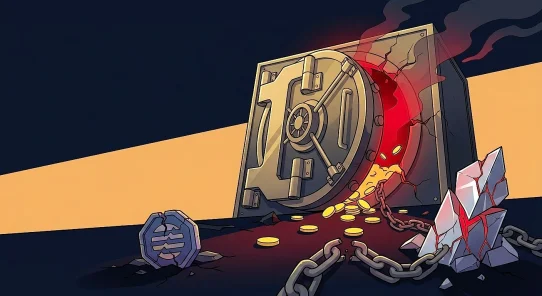
Moonbeam, the Polkadot-based interoperability protocol, dropped a bombshell. The project is pivoting from Polkadot to Ethereum layer 2 Base. Moonbeam announced the Moonbeam Protocol on Friday. This new focus targets AI agent communication and settlement.
The protocol aims to capture the emerging AI agent market. Moonbeam called it “a pivot to the most exciting frontier in crypto.” They want autonomous AI agents to find each other. Negotiate work. Pay each other on-chain. No middleman involved.
Moonbeam did not provide a launch timeline for the AI agent platform. But they gave GLMR holders a clear deadline. Bridge tokens from the Polkadot parachain to Base before July 31.
Why It Matters
This pivot signals a major shift in the world wars. Projects are voting with their code. Moonbeam chose Base over Polkadot for their AI agent future. That tells us where the real momentum lives right now.
The AI agent thesis is gaining traction across crypto. Coinbase CEO Brian Armstrong and Circle CEO Jeremy Allaire both predict AI agents will dominate blockchain payments. They see agents as the next big user base for on-chain transactions.
Base offers different advantages than Polkadot. As an Ethereum layer 2, Base connects to the massive DeFi world. It taps into Ethereum’s liquidity and user base. Polkadot, while technically smart, has struggled with use.
For investors, this move highlights how infrastructure competition is heating up. Base’s growing appeal could attract more projects away from other chains. This may reshape where new projects choose to build. The AI agent focus could also unlock new revenue streams if adoption gains steam.
The token-market signal here is clear: developers prioritize user access over technical features when chasing growth. Base’s Ethereum compatibility gives it network effects that Polkadot cannot match. This creates a feedback loop where more users attract more builders, which in turn draws more users.
Token Metrics View
DOT trades around $0.88, up less than 1% over the past day. The seven-day move shows more strength, up about 8%. Technical momentum reads neutral. No clear trend direction exists right now.
Volatility sits in the middle range. The price trades inside its recent channel. Neither bulls nor bears control the tape. Support sits near $0.77. Resistance looms around $1.02.
Smart-money netflow shows mixed signals. The pivot news has not triggered strong directional betting. Traders appear to be watching how the migration unfolds.
The trend just flipped bearish, suggesting short-term weakness. Momentum is weak, showing the token is neither overbought nor oversold. The trend strength is weak, indicating no clear directional bias. The neutral technical picture matches the uncertainty around the pivot.
This token-market signal appears in our Daily Pulse coverage as a cautionary tale. The technical setup suggests waiting for clearer directional signals before taking positions. The neutral momentum reading aligns with broader market indecision about infrastructure plays.
Market Context
This story falls under protocol shift and adoption signal. Moonbeam’s move represents a bet on AI agents as the next crypto growth vector. The infrastructure choice matters. Base versus Polkadot reflects different ways to build.
Base represents the Ethereum-centric world. It prioritizes fit with existing DeFi tools. It uses Ethereum’s network effects. Polkadot focuses on links between chains. It aims to connect special blockchains.
The AI agent narrative has grabbed attention across the industry. Coinbase launched its x402 payments protocol for agents. Aptos and Near rolled out tools for agent-driven activity. This pattern mirrors past crypto shifts. Projects often move to chains with more users and money.
The 2020-2021 DeFi boom saw many projects migrate to Ethereum. Now Base is becoming the new hub for AI-focused builds. This migration pattern has precedent: during the 2017 ICO boom, many projects shifted from Bitcoin to Ethereum for smart contract capabilities.
Category framing places this within the broader infrastructure realignment trend. As specialized use cases emerge, projects gravitate toward ecosystems with the most relevant tooling. AI agents require different infrastructure than DeFi or NFTs.
Risks to Watch
GLMR holders face execution risk on the migration. Bridge flaws or code bugs could trap tokens. The July 31 deadline creates pressure. Tech issues could cause user loss.
Polkadot world risk grows with this exit. More exits could follow if Base keeps drawing builders.
AI agent use remains unsure. The tech needs time to grow. If agents fail to catch on, Moonbeam’s pivot could flop. The project might end up with no users on either chain.
Rules risk exists for AI agents on-chain. Different places may treat self-governing agents in various ways. Legal rules could limit what agents can do or create compliance costs.
What to Watch Next
- Watch GLMR token move before July 31 date
- Track Moonbeam Protocol launch time and features
- Look for other Polkadot projects thinking of similar moves
- Track x402 protocol volume on Base exceeding $5M
- Follow rule changes around self-run agents
This article is for informational purposes only. It does not give investment advice or tell you to buy or sell any crypto.
Sources / Data Used
- Moonbeam news update on Base move
- Coinbase CEO on AI agents
- Circle CEO on stablecoin use by AI agents
- AI agents as top blockchain users
- x402 protocol volume data
- Zuckerberg on AI agent growth
- Token Metrics data for DOT price, tech signs, and market data