

Signal Snapshot
- Token Metrics data shows BitDelta removed ONE futures on Aug 4, cutting a major trading venue.
- Top risk is the unverified mint claim, and a rollback could split the network or erode trust.
Key Takeaways
- A rollback is a rare, drastic step that could split the network and hurt faith in layer-1 blockchains.
- Investors should treat ONE as high risk until cause is clear; watch exchange freezes and the patch.
What Happened
On Tuesday, Harmony’s public statement said the team was working with exchanges to stop and freeze funds. The layer-1 blockchain also said it was preparing a patch and looking at rollback options. Harmony did not confirm the cause, the number of tokens created, or the amount sent to exchanges.
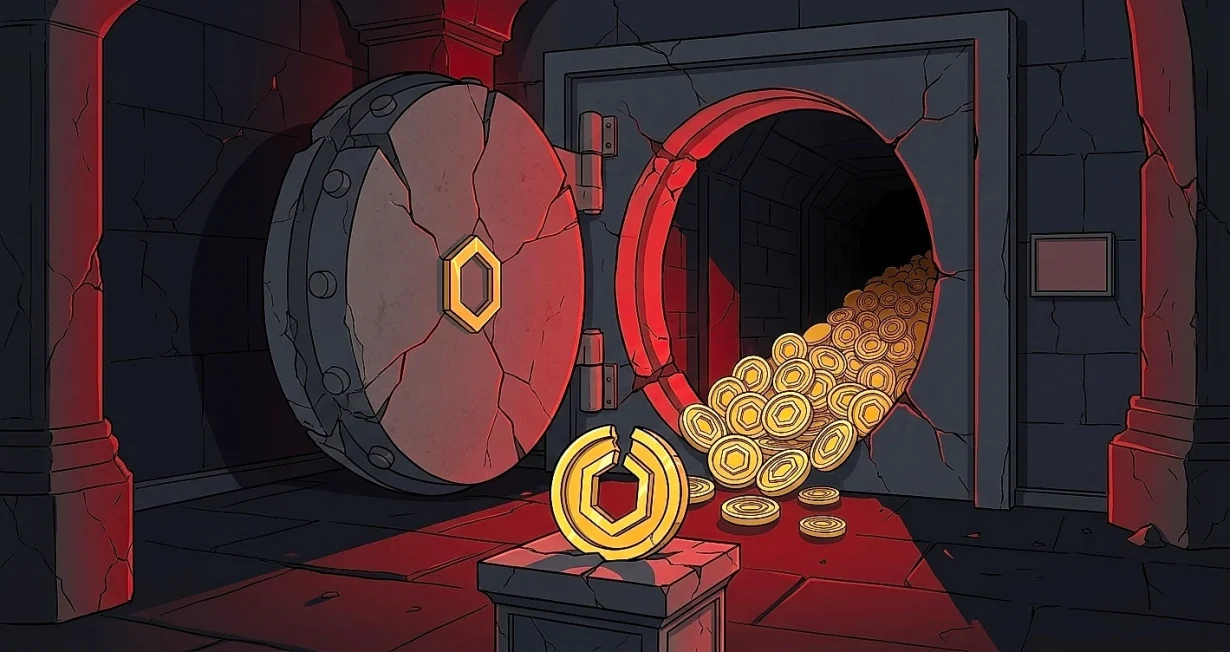
An X account called Juiceberg claimed the unauthorized ONE tokens were minted through empty blocks and that about 2.8 billion tokens were quickly funneled to exchanges as ONE’s price fell. Juiceberg estimated the attacker had about 115 million ONE remaining onchain. Or 2.9% of the amount allegedly minted, with the remainder either sold or held in exchange deposit wallets. Cointelegraph could not independently verify these claims. The claims remain unproven as of publication.
This is not Harmony’s first security scare. The network suffered a June 2022 Horizon Bridge hack that stole about $100 million. The FBI later tied that attack to North Korea’s Lazarus Group.
Why It Matters
A rollback means rewriting the blockchain’s history. That breaks a core promise of crypto: that the ledger is final. If Harmony rolls back, it shows a layer-1 can still be bent by its team.
The move would follow a messy 2022 hack. That old breach hurt users and drew a North Korea link. Another crisis so soon could make big buyers wary of building on Harmony.
For everyday token holders, the risk is clear. If the chain splits, they could end up with coins on two chains. That often craters the price and confuses exchanges. Small holders may find their tokens worthless if a split favors one chain. Exchanges may delist ONE to avoid confusion. That would further hurt liquidity.
The fact that exchanges are freezing funds is a good sign. It limits the attacker’s exit. But it also shows the team relies on central points of control.
Investor implications run deeper than price. A rollback can invalidate trades executed during the disputed window, leaving buyers of ONE on certain venues with reversed settlements. Custodians and tax software may mislabel post-rollback balances, creating record-keeping headaches. The unverified nature of the mint claim means supply dilution risk is unknown, so position sizing should reflect worst-case scenarios. Token Metrics urges readers that this is not a buy signal; it is a governance and technical red flag. Active monitoring of official channels is the only sound stance until Harmony confirms facts.
Token Metrics View
Token Metrics data points to a tough setup for ONE even before the exploit news. The Signal stack caught a recent catalyst: BitDelta removed ONE futures on Aug 4. That cut a major venue where traders bet on the token. For investors, the loss of a futures market means fewer hedging tools. Spot holders cannot offset downside with short derivatives, so panic selling meets thinner liquidity.
The Daily Pulse classification flagged this story as a main item. That means the event is central to today’s crypto news flow, not a side note. Investor implication: high news prominence draws retail attention and can amplify volatility in both directions.
The only Polymarket market pulled in by Token Metrics was unrelated to this hack. It asked about a tropical cyclone forming by mid-August, with a yes probability near 95%. Prediction-market traders are not pricing this event yet, implying smart money sees no tradable outcome curve. That absence of a market is itself a signal: counterparties lack clarity to quote odds.
No price or smart-money flow fields were in the snapshot, so we can’t read netflow. But the loss of a futures market is a real liquidity hit. Fewer places to trade often means wider spreads and sharper drops when panic hits. Losing futures means less ability to hedge, so spot sellers face more pressure.
Investors should see the BitDelta exit as a warning. A trading venue dropping a token weeks before a crisis is not a good look.
Market Context
This is a security event with a protocol shift angle. An unauthorized mint attacks the supply rule of a blockchain. If true, it means the network let someone create tokens out of thin air.
Historical precedent on Harmony itself exists. The June 2022 Horizon Bridge hack took about $100 million. That was a bridge exploit, not a supply mint. But both show the chain has faced repeated stress across the 2022 cycle and now. The clustering of incidents on the same layer-1 points to structural challenges in its security model.
Category framing matters: this incident belongs to the supply-integrity class of bugs, distinct from bridge theft. Layer-1 blockchains market immutability as a feature; a team-driven rollback undermines that narrative. No broader historical analogs were supplied by Token Metrics for this specific event. Still, the pattern of layer-1 teams stepping in to freeze or rollback is rare and usually signals deep trouble. Security events test the trust model of any layer-1. Harmony’s response will set a precedent for other chains.
Risks to Watch
- Confirmation of the mint size is key: if Harmony confirms a large unauthorized mint, supply dilution is massive.
- Exchange freeze success matters: if frozen funds cover most sent tokens, seller pressure eases.
- Rollback decision risk: if Harmony rolls back, expect a possible chain split and exchange chaos.
- Further price drop risk: ONE already fell sharply, more selling could follow if panic spreads.
- Observable condition: watch for an official Harmony post confirming or denying the 2.8 billion token exchange flow claimed by Juiceberg.
- Observable condition: monitor whether the roughly 115 million ONE claimed onchain moves to mixers or new wallets.
What to Watch Next
- Harmony’s next update on cause and exact token count from the ongoing report.
- Whether major exchanges confirm freezes of suspicious ONE deposits.
- The release of the patch and any vote on rollback by validators.
- BitDelta’s stance on relisting ONE futures after the crisis clears.
- Any sign of onchain movement from the 115 million ONE still unaccounted per the unverified claim.
- Official confirmation of the attacker’s entry vector, which Harmony has not disclosed.
This article is for information only. It is not investment advice.
Sources / Data Used
- Harmony’s rollback consideration and exploit claims
- Token Metrics data: ONE catalyst (BitDelta futures removal Aug 4) and Daily Pulse classification.