


TL;DR
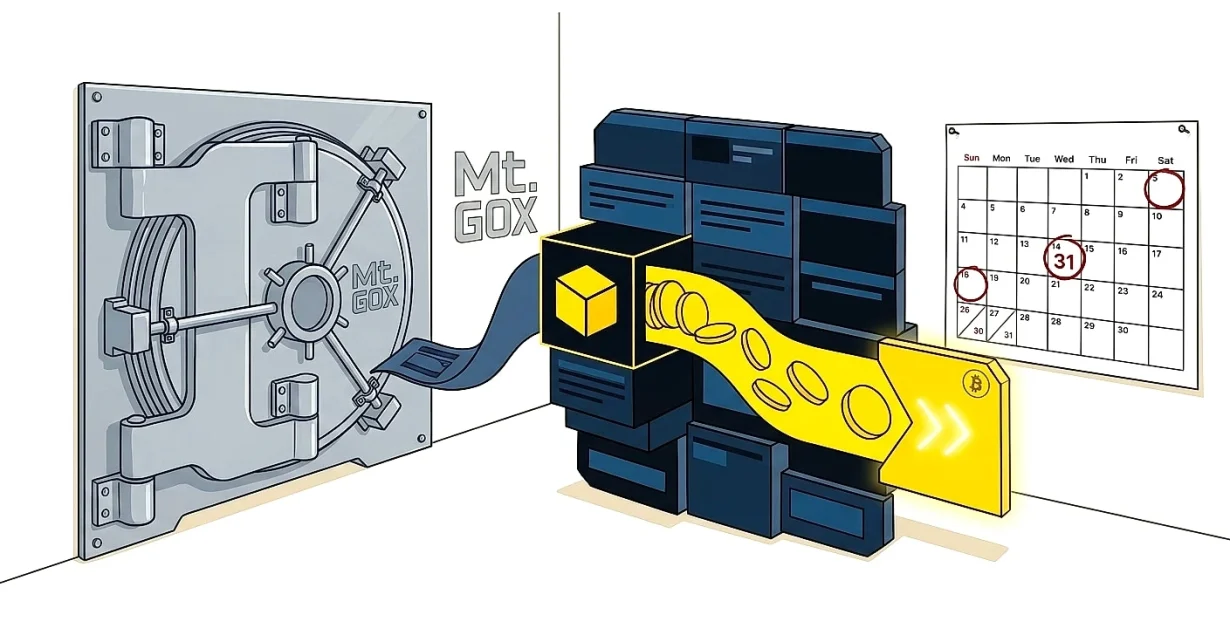
Token Metrics technicals on BTC read bearish. Mt. Gox moved 10,422 bitcoin worth about $739 million to new wallets, marking its largest transfer in months ahead of the October 31, 2026 repayment deadline. The token is breaking down to a new low. Momentum is running weak as the market processes potential selling pressure from creditor repayments.
Context
Mt. Gox once handled over 70% of all bitcoin transactions worldwide before its catastrophic collapse in 2014 following the loss of 850,000 bitcoin. The exchange still holds roughly 34,504 BTC valued at $2.43 billion. This remains the largest holding still being worked out from any failed crypto exchange. Repayments officially began in mid-2024, yet the process has been slow for the roughly 19,500 creditors waiting to recover funds. While many creditors have already received some funds, the remaining balance is significant. Many of these creditors acquired bitcoin before the 2014 collapse when prices were below $1,000. Consequently, any distribution would likely meet sellers ready to realize substantial gains at current prices near $70,000. The trustee in charge, Nobuaki Kobayashi, has pushed back the final deadline twice. The most recent extension, approved by a Tokyo court in October 2025, shifted the deadline from October 31, 2025, to October 31, 2026. The trustee cited incomplete creditor procedures and pending processing issues as the reasons for the delay. This latest transfer happened during a sharp bitcoin slide that took BTC below $71,000 for the first time in weeks. Strategy’s first publicized bitcoin sale, a record 10-session spot ETF outflow streak. Stalled U.S.-Iran ceasefire talks all weigh on the market. This confluence of events creates a fragile environment for large asset movements. The market is already sensitive to supply shocks, making the Mt. Gox situation a critical variable for price stability. The prolonged legal battle and rehabilitation process have made Mt. Gox a lingering shadow over the bitcoin market.
What Token Metrics Data Shows
Data as of June 2, 2026 shows bitcoin trading near $70,116. It is down about 4% on the day and off roughly 9% over the past week. The market cap sits around $1.4 trillion. Token Metrics technicals read bearish across multiple timeframes. The trend bias is bearish, and the token broke down to a new low. Momentum is running weak. Momentum indicators suggest the recent selling has been intense, placing the asset in deeply oversold territory. Price action indicates a breakout to the downside. Price indicators show the asset is trading near a recent low. This often signals that the market is oversold in the short term. Volatility indicators suggest market swings are elevated but manageable. Trend strength indicators confirm the bearish momentum is strong. First support sits near $66,000, with next resistance around $78,400. The technical picture suggests the market is pricing in significant near-term risk. This risk is possibly related to the Mt. Gox distributions and other macro pressures. The smart-money netflow has turned negative, aligning with the bearish token-market signal. This technical weakness contrasts with some Polymarket consensus expectations for a quicker recovery. Token Metrics Daily Pulse coverage highlights the convergence of these technical factors with the on-chain movement from Mt. Gox. The correlation suggests that institutional and retail sentiment are both wavering in the face of potential supply shocks. The “market snapshot” classification in the Daily Pulse underscores a reactive market phase. This is driven by immediate news flow rather than long-term structural changes.
What’s New
The transaction occurred at 04:47 UTC on Tuesday across Bitcoin block 952,072. It split the coins into two parts. Specifically, 10,306.35 BTC worth about $730.78 million went to a previously unseen address starting with 14FEEM. Meanwhile, a smaller slice of 116.30 BTC worth about $8.25 million went to Mt. Gox’s known hot wallet at 1Jbez. Data from Arkham Intelligence confirms these movements. This split pattern mirrors earlier administrative transfers that preceded creditor distributions. However, none of the coins has yet been forwarded to a custody provider or exchange. The move represents the largest single transfer from Mt. Gox in months. It is also the biggest action ahead of the October 31, 2026 deadline. The timing is notable because it comes during a period of market weakness. Bitcoin is already under pressure from multiple fronts. The movement suggests the trustee may be preparing for the next wave of creditor repayments. Such a wave could introduce additional selling pressure into an already strained market. Investors are watching closely to see if these funds move to exchanges, which would precede immediate sales. Historically, large transfers to cold storage or new wallets have served as a precursor to distribution events. The fact that the funds moved to a freshly generated address adds a layer of uncertainty regarding the immediate timeline of liquidation. Market participants are particularly alert because the transfer volume exceeds the daily average trading volume on many smaller exchanges. Potentially causing liquidity crunches.
What to Watch
What to Watch. Monitor the new wallet address starting with 14FEEM. Watch for any outbound transfers to exchanges or custody providers. Such moves would indicate imminent distribution to creditors. Investors should watch for official announcements from trustee Nobuaki Kobayashi regarding the next repayment batch timeline. It is crucial to know how many creditors are included in this round. Track bitcoin’s price action around the $66,000 support level. A break below this point could trigger additional technical selling pressure. Follow the daily netflows from spot bitcoin ETFs. These funds have shown record outflows recently, which could compound any selling from Mt. Gox distributions. Finally, pay attention to broader market sentiment indicators. The Mt. Gox distributions are occurring during a period of multiple headwinds for crypto assets.
This information is for educational purposes only and should not be considered as financial advice.