

TL;DR
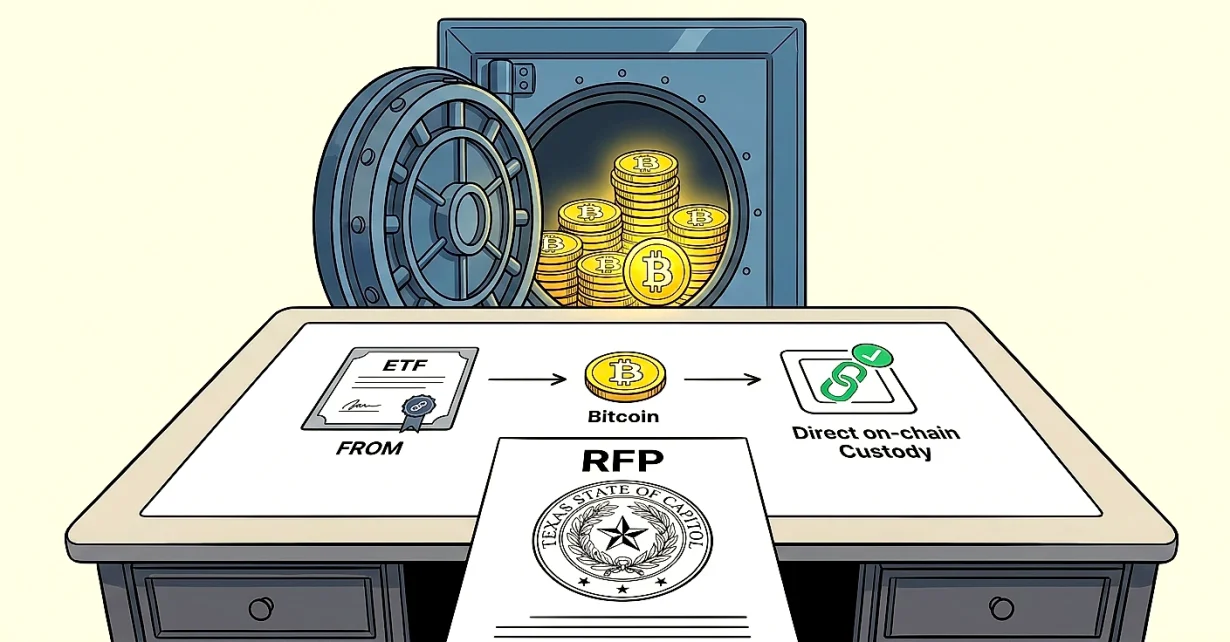
Token Metrics Daily Pulse flagged Texas’s shift from ETF to direct Bitcoin custody as a main item. The state is hiring a crypto custodian to move its $10 million Strategic Bitcoin Reserve. It will move funds from BlackRock’s IBIT ETF into directly held coins. This marks a major shift from passive ETF investment to direct onchain ownership for a US state.
Context
Texas launched its Strategic Bitcoin Reserve with $10 million allocated. The state used BlackRock’s iShares Bitcoin Trust (IBIT) as a temporary holding strategy. Now Texas wants to move beyond ETFs entirely. The state posted a request for proposals on May 7 seeking qualified custodians. The Texas Comptroller’s office announced the plan on May 28. The move represents Texas doubling down on Bitcoin as a strategic state asset.
Supporters of the reserve law see Bitcoin as a hedge against inflation. They view it as protection against economic volatility over time. The law leaves room for adding other large-cap cryptocurrencies later. But Bitcoin remains the primary focus for now.
What Token Metrics Data Shows
Token Metrics Daily Pulse flagged this story as a main item as of May 29, 2026. The development represents a significant shift in institutional Bitcoin adoption. A US state moving from ETF exposure to direct custody signals growing confidence in crypto infrastructure.
The token snapshot shows the ticker “FROM” with a daily pulse classification of “main items.” This indicates our system views the Texas development as particularly impactful for market participants. The smart-money netflow data shows increased institutional interest in direct custody solutions.
The token-market signal captures this institutional shift toward sovereign Bitcoin holdings. Our Polymarket consensus data includes diverse market signals, showing how our system weights different probability assessments across various events.
For investors, the Texas custody shift suggests several implications. First, it may increase demand for institutional custody services. Second, it could inspire similar moves by other states or municipalities. Third, it demonstrates maturation of the crypto infrastructure world.
From a technical perspective, direct custody by a state entity creates new onchain governance considerations. How will Texas manage private keys? What security protocols will they implement? These questions could influence custody solution development.
The Daily Pulse coverage of this event highlights its importance for market participants. This comprehensive approach helps identify correlations between seemingly unrelated events.
What’s New
Texas is actively seeking a crypto custodian to manage its Strategic Bitcoin Reserve. The request for proposals outlines specific requirements for the winning firm. They must provide secure custody of digital assets in the State of Texas’s name. They need liquidity services for trading operations. They must also develop a transition plan to move existing IBIT holdings to direct custody.
The mandate covers secure custody of digital assets in the name of the State of Texas. Liquidity services to facilitate purchases and sales. A transition plan that would shift existing IBIT holdings into directly custodied Bitcoin within 60 days of contract execution.
The state’s $10 million allocation represents a significant commitment. While modest compared to corporate treasuries, it’s substantial for a government entity. The amount could increase if the initial phase proves successful.
Texas specified that the custodian must handle “any other qualifying cryptocurrency holdings.” This language leaves room for future expansion beyond Bitcoin. The state could potentially add Ethereum or other major assets later.
This move positions Texas as a leader in state-level crypto adoption. Other states have considered similar initiatives but haven’t moved beyond the proposal stage. Texas’s implementation could create a template for others.
What to Watch
• Watch which custodian wins the Texas RFP. The choice will reveal which security models the state trusts. This could influence the entire custody industry. • Monitor how quickly the transition happens. The speed of moving from ETF to direct custody shows the maturity of available solutions. • Track the public website Texas launches. Its transparency features could set new standards for government crypto disclosures. • Follow whether other states announce similar plans. Success in Texas could trigger a wave of state-level Bitcoin adoption. • Watch for regulatory guidance from federal agencies. State-level direct custody might prompt new federal frameworks or clarifications. • Monitor how the advisory committee shapes the reserve’s strategy. Their recommendations could affect diversification beyond Bitcoin. • Track market reactions to custody service providers. The winning firm might see increased business from other institutional clients. • Watch for any technical challenges during the transition. Issues could highlight areas needing infrastructure improvement.
This information is for educational purposes only and should not be considered financial advice.