

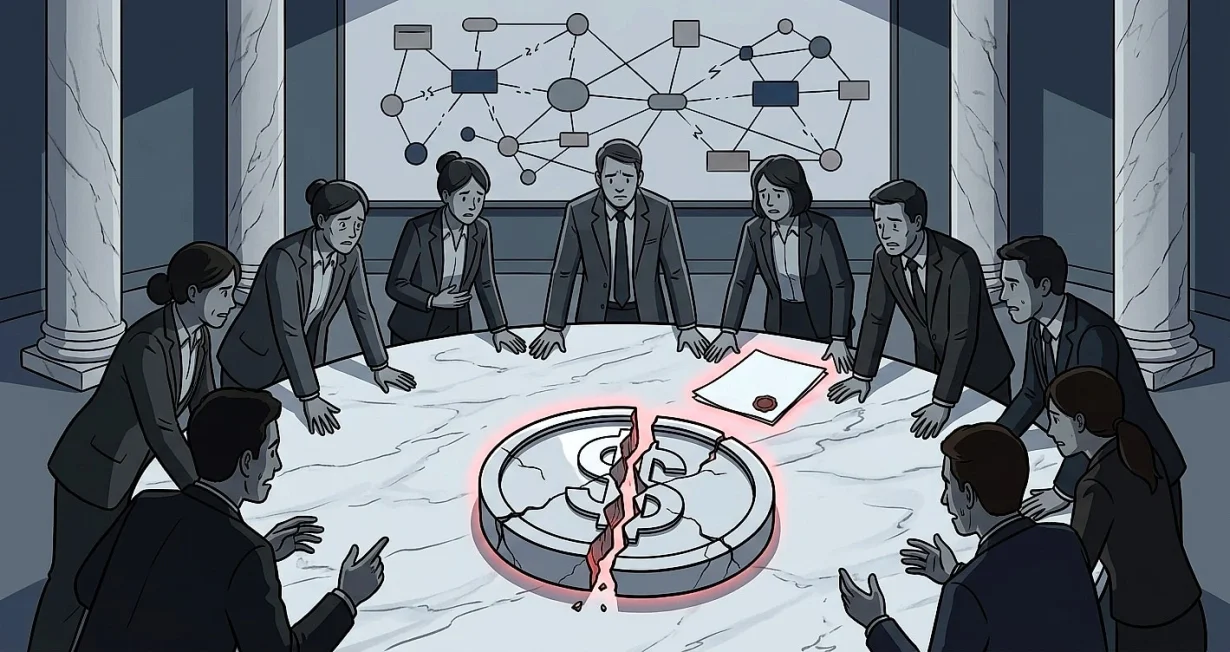

Signal Snapshot
- Stablecoins have never faced a real global panic. Regulators now admit they are not ready.
- The Financial Stability Board warned global stablecoins remain untested in severe stress. It said national rules are also untested for insolvency.
- The watchdog called for more cross-border sharing of information. It wants joint monitoring and planning for distress or failure.
- The market started 2025 at around $206 billion. That size means a freeze could hit many holders at once.
- The top risk is slow redemptions in a panic. Reserves could sit in one place while claims spike in another.
Key Takeaways
- What happened: The Financial Stability Board said stablecoin rules could fail across borders in a crisis. It urged joint planning before trouble hits.
- Why it matters: Stablecoins promise quick redemption at face value. A delay would shake trust in the whole rail.
- The real investor read: This is a regulatory shift. Watch for joint drills and data sharing, not just new laws.
What Happened
The report focuses on global stablecoins and cross-border risk. Global stablecoins are crypto tokens pegged to fiat currency.
National rules are growing at different speeds. That gap raises hard questions about how holders get paid back.
The core worry is simple. A holder expects to redeem fast for a dollar or euro. In a panic, that promise could break. Reserves may be slow to move. Payouts may stall across borders.
The report flags multi-issuer stablecoin models as a weak spot. Coins jointly issued by firms in many places can split risk in bad ways. Reserves can sit trapped in one place. Redemption calls can surge in another place.
Markets do not close on weekends. Shocks can spread fast at night. Hard-to-trace flows can hide stress until it is big.
The fix it wants is practical. Share more data across borders. Track stress in shared ways. Plan for stablecoin distress planning before an issuer fails. Do not wait for the fire to start.
Why It Matters
This is a regulatory shift. It is not about one coin or one firm. It is about how the rules work when money tries to leave fast.
Think of it like a fire drill for banks. Each country has its own exits. Stablecoins use all the exits at once. No one has tested if the doors open together.
For holders, the issue is trust. Stablecoins sell calm. They promise one coin equals one dollar. If redemption slows in a panic, that calm breaks. Fear can feed on delay.
For builders and exchanges, the issue is plumbing. Payouts need cash or safe assets ready to go. If reserves sit in the wrong place, payouts wait. Waiting can force sales elsewhere.
For regulators, the issue is speed. A run can start on a phone at midnight. It can jump borders in minutes. Paper plans that assume office hours will not help.
Here is the deal. Stablecoins are the crypto rail for payments and settlement. People use them to move value fast. They use them to park cash between trades. They use them to send dollars where banks are slow. If that rail jams, pain spreads past crypto.
One second-order point stands out. Different national speeds create gaps. A strict place may demand high-quality reserves. A loose place may allow weaker backing. In stress, money will run to the strong door. That rush can jam even good issuers.
Token Metrics will keep tracking this as a rules story. The signal is not price today. The signal is whether watchdogs start sharing data and running joint plans.
Market Context
This story sits in regulation. It also touches liquidity and sentiment. Rules shape who can redeem, when, and how fast.
The market context is size plus speed. The stablecoin market started 2025 at around $206 billion. That is real money parked in tokens. It is not a small test case now.
Speed adds risk. Crypto trades around the clock. There is no close to pause fear. A scare on Sunday can become a run by Monday.
Privacy adds fog. Pseudonymous moves can hide buildups of stress. Watchdogs may see flows late. Late views mean slow action.
Structure adds knots. A single issuer in one place is simpler to fix. A multi-issuer coin is harder to fix. Who holds the reserves? Who pays first? Which court decides? Those answers are still open.
No Token Metrics historical analogs were supplied for this story. So we will not force a past case here. The board itself says this setup is untested. That is the point. There is no clean prior run to copy.
Still, the pattern is familiar to market watchers. Promises of instant cash break first in a panic. Banks learned this long ago. Money funds learned it too. Stablecoins now face the same test.
What is new is the cross-border twist. Old runs stayed in one banking system. Stablecoin runs can live everywhere at once. That is why the board wants shared eyes and shared plans.
For investors, the read is calm but firm. Do not assume redemption will feel normal on the worst day. Ask where reserves sit. Ask who pays when many people ask at once. If those answers are vague, treat that as risk.
Risks to Watch
The main risk is a redemption jam. Many holders ask for cash at once. Reserves cannot move fast enough. Payouts slip by hours or days.
A second risk is trapped reserves. Cash or bonds sit in one country. Claims spike in another country. Local rules block quick transfers. Holders wait while lawyers talk.
A third risk is foggy data. Watchdogs do not share flow data in real time. Each sees only its own slice. No one sees the full run forming.
A fourth risk is weekend speed. Trouble starts when desks are thin. Social posts spread fear fast. Trading keeps going while staff scramble.
What would make this matter less? Clear proof of joint drills. Public deals to share data fast. Plain rules on who pays first in failure. Real reserve reports that match across borders.
What would change the read? A big issuer showing it can pay in stress. A joint test that moves reserves across borders in hours. New laws that line up on custody and payout order.
What would show this was mostly noise? Years pass with no joint action. Reports pile up with no follow-through. Issuers keep vague reserve terms with no pushback.
Do not look for hype here. Look for plumbing. Pipes matter more than promises in a run.
What to Watch Next
- Watch for data-sharing deals between watchdogs. Look for names, dates, and what data gets shared. Talk without a deal means little.
- Watch for joint failure plans for big stablecoins. Look for who pays first and who moves reserves. A plan with no owner is not a plan.
- Watch for reserve location disclosures. Look for where cash and bonds sit by country. Trapped cash is the key risk to track.
- Watch for redemption time tests in stress. Look for proof of fast payouts at scale. Slow payouts in calm times warn of worse in panic.
- Watch for rule gaps across big markets. Look for payout order and holder rights by place. Wide gaps invite runs to the strong door.
This article is for information only. It is not investment advice.