


Signal Snapshot
- Chainlink shipped a major bridge upgrade this week. It matters now because trust in bridges is still weak.
- The release is CCIP 2.0. It lets firms add their own security checks to cross-chain moves.
- LINK trades near $15. It is up about 2% on the day and up about 10% on the week.
- Token Metrics technicals read bullish going into the news. Momentum is strong and the trend just flipped bullish.
- Top risk is clear. Users who skip custom checks still rely on one default verifier network.
Key Takeaways
- Chainlink released CCIP 2.0. It adds custom security checks for moving tokens and messages between chains.
- The real investor read is adoption versus risk. Better tools help only if big users turn them on.
What Happened
Chainlink released Cross-Chain Interoperability Protocol 2.0 on Monday. The launch upgrades how different blockchains talk and move funds.
Chainlink is best known as an oracle network. It feeds outside data like asset prices to lending and trading apps. CCIP first launched in 2023. It moves tokens and messages between chains.
Blockchains cannot talk direct. So a bridge must confirm action on one chain before funds move on the next. Verifiers do that job. They check that a deal really happened first.
The new version lets firms add their own security checks. The idea is simple. Do not trust one gate alone.
You can read more in Chainlink bridge upgrade report.
One detail matters for risk. So users who skip added verifiers appear to rely on one network, not two. That makes the default setup simpler. It also makes custom checks more vital.
This is a protocol shift. It changes how builders secure cross-chain flows. It does not change Chainlink’s core oracle job. It builds on it.
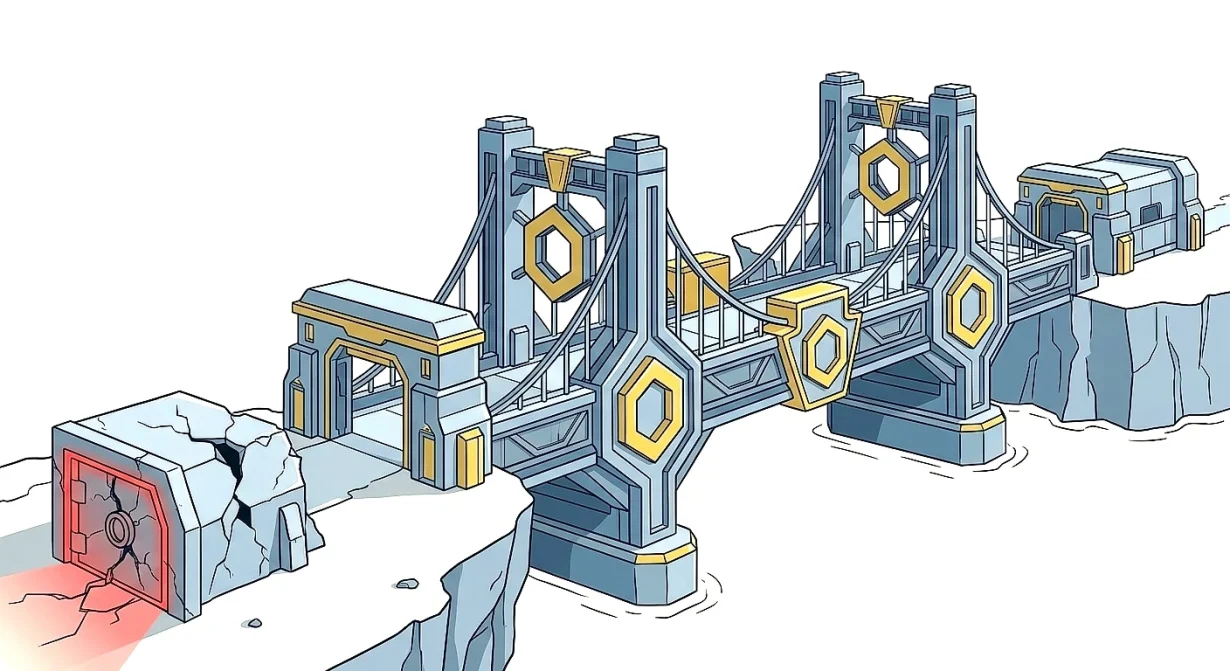
For readers new to bridges, think of an airport link bus. Two terminals cannot touch. The bus must prove you came from Terminal A before Terminal B lets you in. Verifiers are the ticket checkers. CCIP 2.0 lets each airline add its own checker too.
Here is the deal. One checker can miss or cheat. Two or three checkers make fraud much harder. Chainlink now sells the fix as code.
The launch also fits a wider push into bank use. Chainlink wants its tech to serve funds, banks, and payment firms. Custom rules help there. Banks love their own controls. They rarely accept one-size fits all.
Why It Matters
Bridges move real value. When they break, losses are fast and final. A $292 million hack resets trust for months. Builders pause. Users pull funds. Fees dry up.
CCIP 2.0 tries to break that cycle. It gives firms control over safety. A lending app can demand extra proof. A fund can require its own signer. A payment firm can set strict limits.
That control could aid demand from big buyers. Big buyers hate single points of failure. They want clear roles and audit trails. Custom checks give them both.
There is a second-order read too. Better bridge safety helps tokenization and stablecoins. Those rails need to move value across chains with low doubt. If bridges feel safer, more pilots can go live. If they do not, pilots stay small.
In plain terms, this strengthens the settlement rail. Settlement means value moves and lands clean. Stablecoins, tokenized funds, and payments all need that. CCIP sits right in that path.
But there is a catch. Safety is now a choice. Firms must build and run extra checks. Small teams may skip that work. They may trust the default alone. That keeps risk high for their users.
So watch who adopts. A big name with custom checks sends a strong sign. Quiet use with no extra checks sends the reverse. The tech is better. The outcome rests on use.
For LINK holders, the link is indirect. More CCIP use can mean more fees and more mind share. It does not promise revenue today. It builds a path for later demand. Patience matters here.
Token Metrics View
The clearest near-term spark is recent, not the bridge code alone. Chainlink teamed with Infosys on Sep 22. The goal is to standardize several Chainlink services for banking and payments. That is the catalyst Token Metrics flags for LINK.
Think of Infosys as a door opener. Banks trust it. It plugs new tech into old systems. If that work lands, Chainlink gets in front of real payment flows. That is why this date stands out.
Token Metrics technicals read bullish here. The trend just flipped bullish. That means buyers seized the near-term path. Momentum is strong after a sharp week higher.
Price action backs that tone. LINK trades near $15. It is up about 2% on the day. It is up about 10% over the past week. The market cap sits at about $11 billion.
The shape of the move is telling. LINK is trading sideways inside its recent range. Yet it is stretched on the upside of that range. In plain talk, buyers pushed to the top edge. They have not yet broken clean past it.
Volatility is moderate. Moves are lively but not wild. There is also no clear direction on trend strength. That fits a market that jumped, then paused to digest news.
Levels to watch are simple. Next resistance sits near $16. First support sits near $12. Those are lines where buyers or sellers showed up before. They do not predict the next move. They frame risk.
Smart-money flow is not the lead here. Price and the Infosys tie-up tell more. The bridge launch adds fuel. It does not yet prove fresh demand.
Token Metrics classed this as one of its main items in Daily Pulse coverage. That means it cleared the bar for investor focus. It is not background noise.
Put it together like this. A bank-focused tie-up plus a safety upgrade plus a bullish tilt. That is a fair setup. But LINK still needs proof of use. Watch for named users and live flows, not just code.
Market Context
This story sits in product and security. It is also about sentiment. Bridges lost trust after big hacks. Each fix must win it back.
That design is fragile. One miss breaks all.
No other analogs were supplied for this piece. So we will not stretch for past cases. The key point stands alone. Single verifier setups carry clear risk. Multi-check setups aim to cut it.
Why now? Cross-chain flows are back in focus. Stablecoins move across chains daily. Tokenized assets need the same path. Banks test both. They will not scale on weak rails.
Chainlink plays a central role here. Oracles feed prices. Bridges move value. Put them close and apps get both facts and funds. That combo is why CCIP matters to builders.
Regulation also hangs over this. The rules for bridges are still open. Clear safety steps can help with bank talks. Weak safety can invite more doubt. Code ships faster than rules do.
Risks to Watch
Custom checks are optional. That is the core risk. If firms skip them, safety gains fade fast.
Default trust still rests on one verifier network. Users should know what they rely on.
Complexity is its own risk. More checks can mean more bugs. Bad custom code can fail too. Audits and tests must keep pace.
Adoption may lag. Banks move slow. Pilots can stall. Hype can run ahead of live use.
What would change the read? Named users with live checks would lift it. Proof of strong flows would help too. On the flip side, low uptake would prove the headline was mostly noise. A fresh bridge loss would hurt trust more.
What to Watch Next
- Named CCIP 2.0 users. Look for funds, apps, or banks that turn on custom checks.
- Infosys follow-through after Sep 22. Look for bank pilots that name Chainlink services.
- LINK range break. Watch if price clears near $16 or slips toward near $12 with volume.
- This is context only. It is not investment advice. Do your own work and size risk with care.
Sources / Data Used
- Chainlink bridge upgrade report
- Token Metrics data used: LINK spot price with 24h and 7d moves. It also includes market cap and plain-English technicals. Pivot levels, Infosys catalyst dated Sep 22, and Daily Pulse classification were used.