

Signal Snapshot
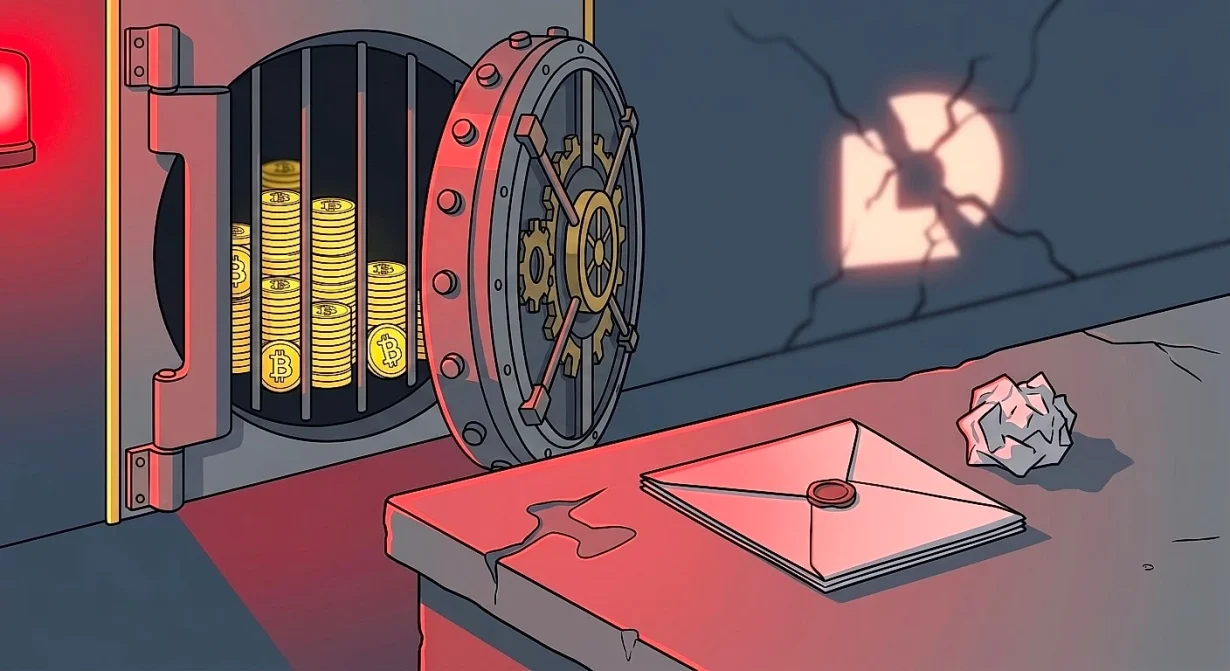
- Blockstream refused a ransom demand for 600 BTC tied to the Liquid exploit.
- Hackers asked the firm to “Return the bitcoin,” per the headline quote.
- This is a security event with no payout to the attackers.
- The remaining 600 BTC stays in hacker hands after the refusal.
- Top risk: the stolen coins may hit the market and add sell pressure.
- Sentiment among crypto firms likely leans toward not rewarding criminals.
Key Takeaways
- Blockstream said no to returning 600 BTC demanded by exploit hackers.
- Paying ransoms can invite more attacks, so refusal sets a clear stance.
- The stolen supply stays offline, but investors should watch on-chain moves.
What Happened
The event was reported on September 11, 2026.
The 600 BTC is described as the remaining amount from the Liquid exploit. That implies some funds were dealt with earlier. The hackers still hold the coins.
Blockstream is a known crypto infrastructure company. Its stance may influence how other firms act when hit. The story is straightforward: no ransom paid.
The URL itself includes the date 2026-09-11. That matches the published timestamp. The headline uses the word “remaining” to mark the 600 BTC. This suggests prior actions on other stolen funds. We do not have those details in our sources.
Why It Matters
A ransom refusal changes how future hackers view crypto firms. If big players refuse to pay, attacks may become less profitable. That could lower the number of exploits over time.
But there is a tradeoff. Stolen coins that sit in hacker wallets can still move later. That creates a floating risk for market liquidity. The Blockstream stance is a signal to the industry.
When a firm rejects a demand, it tells attackers that crime does not pay here. This may protect users in the long run. It also shows strength during a security crisis.
The quote “Return the bitcoin” shows the brazen tone of hackers. They expect firms to comply. Blockstream’s no sends a different message. The market should take note.
Investors should think about counterparty risk. A firm that pays ransom may face more attacks. A firm that refuses may suffer short-term loss. The Blockstream choice favors long-term health.
Crypto users rely on firms to guard funds. A clear no-ransom rule helps that trust. A no-ransom policy can also affect insurance rates for crypto firms. Insurers may reward tough stances. That is another second-order win.
Token Metrics View
Token Metrics data does not show a direct signal on this hack. But the supplied MATIC snapshot gives a read on another market. MATIC traded near 13 cents as of September 11, 2026.
The Polymarket consensus on a US-Iran meeting shows about 92% odds of no qualifying talk by September 30. A second market puts the chance of any meeting at about 8%.
A third market gives about 1% for a Qatar venue. These prediction markets are unrelated to the Blockstream news. They show how Token Metrics pulls in broad signals.
The MATIC spot price was around $0.13 with no market cap reported in the snapshot. That is a tiny price per token. Investors can watch these reads as part of a wider risk picture.
The hack story stands on its own. Token Metrics data covers many corners of crypto. The Polymarket numbers reflect geopolitical risk, not on-chain crime. Still, they are part of the daily signal stack.
The Polymarket markets resolve by late September 2026. They are not about crypto at all. Still, Token Metrics includes them in the signal stack. The MATIC ticker is a token with low price. Its snapshot lacks flow data. We report it as supplied.
Market Context
This story is a security event. A firm rejected a ransom for stolen bitcoin. No historical analogs were supplied in our inputs. Still, the pattern is clear: pay or don’t pay.
The crypto market has seen many exchange hacks. Refusing ransom is a stance that protects long-term trust. It also means the stolen coins stay in hacker control.
We classify this under security and market-structure shift. The rails affected are custody and settlement. Bitcoin’s settled ledger means moved coins are traceable, but not always recoverable.
A refusal can also shape narrative cycles. If the industry unifies behind no ransom, hackers may shift targets. That is a second-order effect worth watching. The Liquid exploit remains a scar.
Custody is the rail that holds user coins. Settlement is the rail that moves them. A hack breaks both. Refusal keeps the break visible. The Bitcoin network itself is neutral. It does not care who holds coins. That is why settlement is robust but recovery is hard.
Risks to Watch
- If the 600 BTC moves to an exchange, selling pressure could rise.
- If Blockstream reverses and pays, it sets a bad precedent for the industry.
- If regulators comment on ransom payments, the rules could shift.
- If the hackers dump coins, liquidity in BTC pairs may tighten.
- If another firm pays a ransom, the no-pay stance weakens.
- If the coins are mixed via privacy tools, tracing gets hard.
What to Watch Next
- Track the 600 BTC wallet for any on-chain movement to exchanges.
- Watch for a formal statement from Liquid on the exploit recovery.
- Monitor Polymarket odds on US-Iran talks as a macro risk gauge.
- See if other firms copy Blockstream’s no-ransom stance.
- Observe BTC price reaction if the coins ever move.
- Check if any regulator issues guidance on ransom payments.
This article is for information only. It is not investment advice or a recommendation to buy or sell any token.
Sources / Data Used
- Blockstream ransom refusal report from The Block.
- Token Metrics data on MATIC price and Polymarket consensus markets.