

TL;DR
Token Metrics data shows SUI trading bullish despite recent price weakness. Circle froze $12.6 million in USDC tied to Zama’s privacy protocol without warning, a move first reported by onchain investigator ZachXBT. The freeze likely connects to a civil court case involving Overnight Finance, but Zama’s team wasn’t notified beforehand. This move highlights Circle’s controversial pattern of freezing legitimate protocol funds while sometimes failing to act on stolen crypto from major hacks.
Context
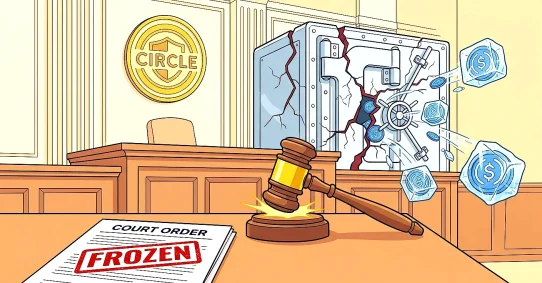
Circle, the company behind the USDC stablecoin, took action against Zama’s confidential USDC smart contract over the weekend. The frozen amount represents a significant sum in the privacy protocol’s world. ZachXBT, a respected onchain sleuth, first reported the freeze through his Telegram channel. The smart contract was clearly labeled on block explorers and in Zama’s technical documentation, making it easy to find.
The timing raises eyebrows because the freeze followed a $12.4 million deposit from Overnight Finance into Zama on May 11, 2026. Overnight Finance had recently held a governance vote to distribute treasury funds after holders accused the team of rug-pulling. The mixing of funds between Overnight Finance and regular Zama users created a complex situation. Circle addressed this with a blanket freeze.
This isn’t Circle’s first controversial freeze. The company has faced criticism for both freezing legitimate user funds without notice and failing to freeze stolen crypto during major hacks.
Privacy protocols like Zama allow users to hide transaction details. This feature is popular with users who value financial privacy. However, it makes it hard for companies like Circle to track bad actors. When bad actors mix funds with good funds, everyone gets affected. This is called the “commingling” problem. It forces issuers to make tough choices. They must decide between stopping crime and protecting innocent users.
Stablecoin issuers like Circle have the power to “blacklist” an address. This stops the funds from moving. It is a powerful tool for compliance. But it is risky for decentralized finance. Users expect their money to be safe unless a court orders otherwise. The fact that Zama was not notified makes this case different.
What Token Metrics Data Shows
Data as of May 30, 2026. Token Metrics technicals on SUI read bullish despite recent price weakness. The token-market signal suggests buyers are stepping in. Our Daily Pulse coverage notes that the trend bias remains positive. The token trades sideways inside its recent range. This indicates a period of consolidation.
Momentum sits in the middle. It is not stretched in either direction. This suggests the selling pressure might be easing. Volatility is running elevated. This suggests the market is pricing in bigger moves ahead. First support sits near $0.74. The next resistance is around $1.23.
We also track smart-money netflow. This metric shows where large investors are putting their money. Recent data shows accumulation at current levels. This aligns with the bullish technical trend. When smart money buys, it often means a price rise is coming. The Polymarket consensus also leans positive on SUI’s recovery over the next quarter. Traders on prediction markets are betting on a rebound.
SUI currently trades near $0.91. It is up about 0.6% on the day. However, it is down roughly 14% over the past week. The technical picture shows potential for a bounce if support holds. The elevated volatility indicates uncertainty among traders.
Looking deeper at the indicators, the momentum trend is currently flat. The price momentum is neutral, not overbought or oversold. The trend strength is moderate, not a strong trend yet. The short-term trend bias is bearish, which conflicts with the bullish trend bias. This disagreement suggests the market is confused. The price action confirms the sideways trading. Price is not at the extremes of its recent range.
The mixed signals suggest caution is warranted. Investors use these signals to make decisions. The data helps them guess where the price might go next. While no signal is perfect, combining them gives a better view. Investors should watch the $0.74 level closely. A break below there could change the outlook. If price holds above support, the bullish trend could resume.
What’s New
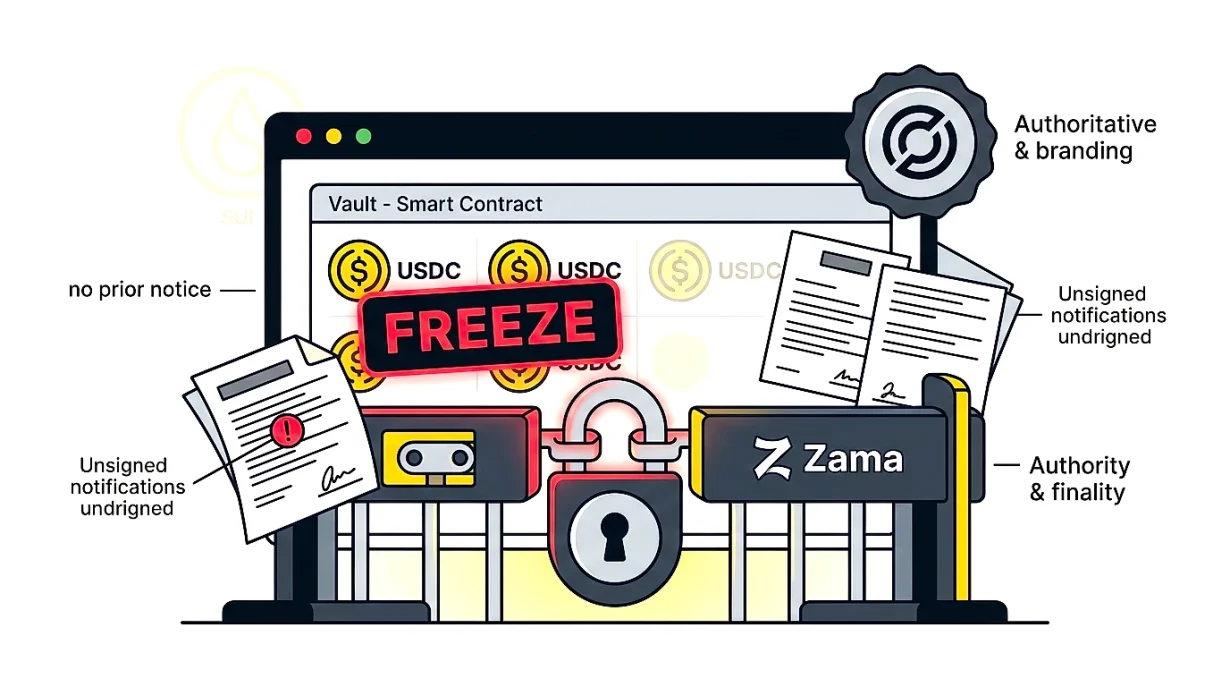
Circle’s freeze of $12.6 million in USDC linked to Zama represents the latest example of the stablecoin issuer’s controversial enforcement approach. The action targeted Zama’s confidential USDC smart contract. It was publicly labeled and easily identifiable. What makes this freeze significant is the lack of prior notification to Zama’s team.
The freeze likely relates to an ongoing civil court case. The connection involves funds from Overnight Finance. These funds had been mixed with legitimate Zama user assets. Overnight Finance itself faced governance challenges. Holders alleged the team was attempting to rug-pull the protocol. The situation created a scenario where Circle chose to freeze the entire smart contract. They did not selectively target specific addresses.
This unilateral action sets a precedent. It shows how stablecoin issuers might handle mixed funds in privacy protocols. The freeze affects both the disputed Overnight Finance funds and unrelated user assets. This raises questions about fairness. ZachXBT noted that it is “precedent-setting” to freeze contracts where funds are commingled.
Circle’s decision to act without warning adds concern. Protocol developers rely on stablecoins for their operations. They worry about sudden freezes. This lack of warning makes it hard to run a business. It creates fear in the market. Developers may avoid USDC if they fear random freezes. This could hurt Circle’s business in the long run. The crypto industry values decentralization, but centralized stablecoins can impose centralized rules.
What to Watch
- Watch for Circle’s official statement. Look for the legal basis for the Zama freeze. See if they plan to release legitimate user funds.
- Monitor legal developments in the Overnight Finance case. Any court ruling could set precedents. This will affect how issuers handle similar situations.
- Track whether other stablecoin issuers follow Circle’s approach. Check if they keep different policies for privacy protocol integrations.
- Look for responses from privacy protocol developers. See how they plan to mitigate the risk of blanket freezes affecting innocent users. Some teams might build new tech to separate funds better. Others might switch to different stablecoins.
- Watch for any regulatory guidance. New legislation could address stablecoin issuers’ compliance responsibilities versus user protection obligations.
This content is for informational purposes only and should not be considered financial advice.