

What Every Investor Needs to Know!
Table of Contents
Token Metrics conducted a comprehensive, AI-driven analysis of crypto wallets security in 2026 to answer the single most important question in digital asset ownership: are crypto wallets actually safe? We examined the real threats facing wallet users today, the technologies protecting them, and the critical mistakes that still cause people to lose their funds. Whether you’re storing your first Bitcoin or managing a six-figure DeFi portfolio, this is the security breakdown you need before choosing where to keep your crypto.
“Can I lose my crypto?” That’s the question behind every security concern. It’s the reason people hesitate before moving funds off an exchange. It’s the reason hardware wallet sales surge after every major hack. And it’s a completely fair question — because the answer, depending on the choices you make, is yes. But the more useful answer is that the vast majority of crypto losses in 2026 are entirely preventable, and understanding how crypto wallets work is the first step toward making sure you never become a cautionary tale.
The Real Question: Can Your Wallet Be Hacked?
Let’s address the fear directly. Can a crypto wallet be hacked? The honest answer is that it depends entirely on the type of wallet, how you use it, and the security practices you follow. A hardware wallet that has never been connected to a malicious site and whose seed phrase is stored offline in a secure location is extraordinarily difficult to compromise. The cryptographic principles behind modern wallet architecture are sound — the math works. What fails is almost always human behavior, not the technology itself.
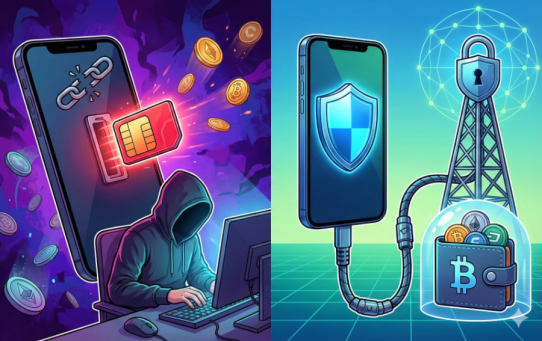
The most common attack vectors in 2026 are not brute-force key cracking or sophisticated blockchain exploits. They are phishing attacks that trick users into signing malicious transactions, fake wallet apps distributed through unofficial channels, clipboard malware that swaps wallet addresses during copy-paste operations, and social engineering schemes that convince people to reveal their seed phrases. Every single one of these attacks targets the user, not the wallet.
Software crypto wallets — the apps on your phone or browser extensions in your desktop — are more vulnerable than hardware crypto wallets simply because they operate on internet-connected devices. If your phone is compromised by malware, a software wallet’s private keys could theoretically be extracted. This doesn’t mean software crypto wallets are unsafe for everyday use, but it does mean they carry a fundamentally different risk profile than cold storage solutions. For significant holdings, the security calculus strongly favors hardware crypto wallets.
Hardware Wallets vs Software Wallets: The Security Gap
The distinction between hardware and software wallets isn’t just a feature comparison — it’s a security architecture decision that determines your exposure to the most common threat vectors in crypto. Hardware wallets like Ledger, Trezor, NGRAVE, and BitBox store your private keys on a dedicated physical device that never exposes those keys to an internet-connected environment. When you sign a transaction with a hardware wallet, the signing happens on the device itself. Your private keys never leave the chip. This air-gapped approach eliminates the entire category of remote attacks that threaten software crypto wallets.
Software wallets — including popular options like MetaMask, Trust Wallet, Phantom, and Rabby — store private keys on your device, encrypted behind a password. They’re convenient, fast, and essential for interacting with DeFi protocols, NFT marketplaces, and decentralized applications. But that convenience comes with trade-offs. If your device is compromised, if you download a fake version of the wallet, or if you approve a malicious smart contract, your funds can be drained in seconds. There is no confirmation dialog that can save you once a signed transaction hits the blockchain.
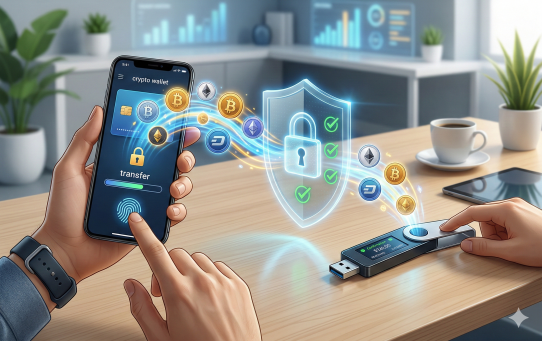
The security best practice that has emerged as standard advice in 2026 is straightforward: use a software wallet for active trading and DeFi participation with only the funds you’re willing to risk, and store the majority of your holdings in a hardware wallet that you interact with as infrequently as possible. This two-wallet approach balances usability with security and mirrors how traditional finance separates checking accounts from savings accounts.
What Happens If You Lose Your Seed Phrase?
This is the question that keeps crypto holders awake at night, and the answer is brutally simple: if you lose your seed phrase and your device is destroyed or inaccessible, your funds are gone. Permanently. No customer support team can help you. No wallet company can reset your password. No blockchain developer can reverse your transactions. The entire value proposition of self-custody is that no one except you controls your assets — and the flip side of that freedom is that no one except you can recover them.
The seed phrase — typically a sequence of 12 or 24 words generated when you create a wallet — is the master key to your entire wallet. Every private key, every address, every token balance associated with that wallet can be reconstructed from that single phrase. Lose it, and you’ve lost access to everything. According to on-chain analysis, billions of dollars worth of Bitcoin alone are estimated to be permanently inaccessible due to lost keys and forgotten seed phrases. This isn’t a theoretical risk. It happens constantly.
The good news is that 2026 has brought meaningful innovation in recovery and backup technology. Social recovery crypto wallets, pioneered by projects building on smart contract wallet architecture, allow users to designate trusted guardians — friends, family members, or institutions — who can collectively authorize wallet recovery without any single guardian having access to the funds. Sharded seed phrase backups split the recovery phrase into encrypted fragments distributed across multiple secure locations, eliminating the single point of failure that traditional seed phrases represent.
Biometric-secured crypto wallets are also gaining traction, tying wallet access to fingerprint or facial recognition data in ways that add a layer of protection beyond a written phrase. And MPC crypto wallets — which use multi-party computation to distribute key generation and signing across multiple parties — are increasingly available to retail users after years of being limited to institutional custody solutions. These technologies don’t eliminate the need for careful backup practices, but they significantly reduce the risk of total, irrecoverable loss.
Self-Custody vs Exchange Custody: Do You Actually Own Your Crypto?
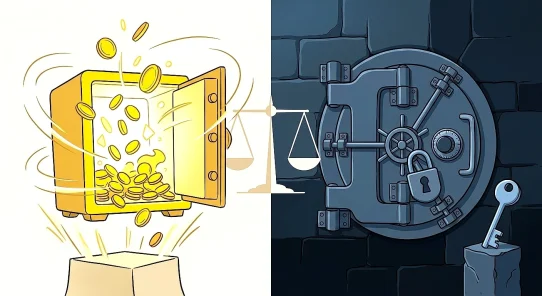
This question has become one of the most important in crypto education, and the answer matters more than most people realize. When you hold crypto on an exchange — Binance, Coinbase, Kraken, or any centralized platform — you don’t actually control the private keys to your assets. The exchange holds those keys on your behalf. You have an account balance that represents your claim to those assets, but in a legal and technical sense, the exchange is the custodian. If the exchange is hacked, freezes withdrawals, goes bankrupt, or faces regulatory action, your access to those funds is at the mercy of the platform’s decisions and solvency.
The collapses of FTX and other centralized platforms in previous years drove this point home with devastating clarity. Millions of users who believed their funds were safe discovered that exchange custody is only as reliable as the exchange itself. “Not your keys, not your coins” isn’t just a slogan — it’s a description of how blockchain ownership actually works.
Self-custody — using a personal wallet where you control the private keys — eliminates counterparty risk entirely. No exchange failure can affect you. No corporate bankruptcy can freeze your funds. No government seizure of an exchange’s assets can touch what you hold in your own wallet. The trade-off is responsibility: you must manage your own security, protect your own seed phrase, and verify your own transactions. For many users in 2026, that trade-off is more than worth it.
Smart contract crypto wallets represent an emerging middle ground, offering programmable security features like spending limits, time-locked transactions, and social recovery while maintaining the self-custodial principle that the user — not a company — controls the wallet. These crypto wallets are becoming increasingly user-friendly and may represent the future of mainstream crypto custody.
Multi-Signature and MPC: The New Standard for Serious Security
For users managing significant crypto holdings, single-key crypto wallets — where one seed phrase controls everything — are increasingly seen as insufficient. Multi-signature crypto wallets require multiple independent keys to authorize a transaction, meaning no single compromised device or stolen seed phrase can result in fund loss. A typical multi-sig setup might require two out of three keys to sign, with each key stored on a different device in a different location.
MPC crypto wallets take a different approach to the same problem. Instead of requiring multiple complete keys, MPC distributes the key generation and signing process across multiple parties so that no single party ever possesses the complete private key. This makes MPC crypto wallets resistant to both external attacks and internal threats, and the technology has matured significantly in 2026 with several consumer-friendly implementations now available.
Both multi-sig and MPC solutions add complexity to the wallet experience, but for anyone holding substantial value in crypto, the additional security is not optional — it’s essential. The crypto industry has learned through painful experience that single points of failure eventually fail.
Token Metrics Verdict: Are Crypto Wallets Safe?
Yes — but only if you use them correctly. The technology behind modern crypto wallets is robust, well-audited, and built on cryptographic foundations that have withstood years of adversarial testing. The vulnerabilities lie almost entirely in user behavior: poor seed phrase management, interaction with malicious contracts, downloading fake wallet applications, and leaving significant funds on centralized exchanges.
Our AI security scoring models evaluate crypto wallets across dozens of risk dimensions, and the data is clear: users who follow basic security hygiene — hardware wallet for storage, software wallet for activity, offline seed phrase backup, transaction verification before signing — face negligible risk of involuntary fund loss. The tools exist to keep your crypto safe. The only question is whether you’ll use them.
Token Metrics recommends a layered security approach: a hardware wallet like Ledger, Trezor, NGRAVE, or BitBox for long-term holdings, a reputable software wallet for daily activity, and a commitment to never storing your seed phrase digitally. Your crypto is exactly as safe as your security practices. Make them strong.
Powered by Token Metrics AI | tokenmetrics.com