


TL;DR
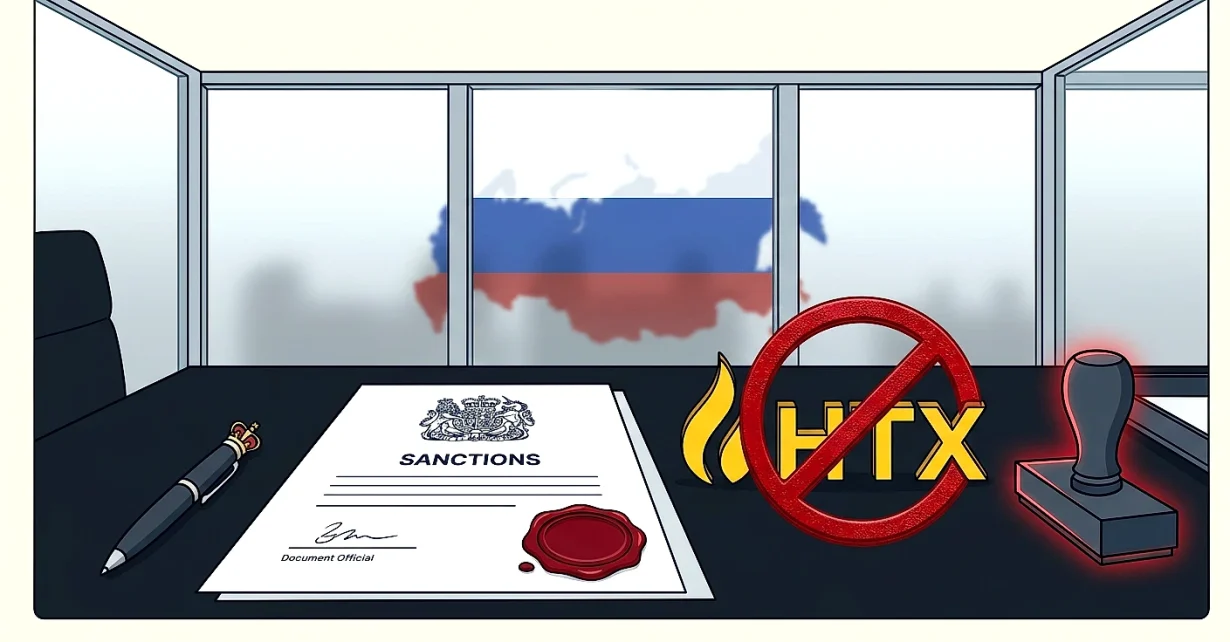
The UK sanctioned HTX exchange for allegedly supporting Russia’s government. This marks the first time the UK used specific regulations against crypto exchanges. The action is part of a broader sweep targeting entities helping Russia evade sanctions.
Context
The United Kingdom has been cracking down on entities that help Russia bypass international sanctions. This latest action targets crypto exchanges that may be facilitating financial services to Russian entities. The UK government has been expanding its regulatory tools to address crypto’s role in potential sanctions evasion.
HTX, formerly known as Huobi Global S.A., has faced regulatory scrutiny before. In February 2026, the UK’s Financial Conduct Authority began legal proceedings against HTX. The FCA alleged HTX published unlawful financial promotions across social media platforms. The exchange rebranded from Huobi to HTX as part of its global expansion strategy.
Justin Sun, a prominent figure in cryptocurrency, serves as a global advisory board member at HTX. This connection adds another layer to the regulatory attention the exchange has received. The UK’s sanctions landscape has evolved significantly since Russia’s invasion of Ukraine in 2022. Governments worldwide have increasingly focused on the crypto sector as a potential avenue for sanctions evasion.
Historical precedent shows that crypto exchanges have faced increasing regulatory pressure globally. The U.S. Treasury Department sanctioned several crypto platforms in 2022 for alleged ties to Russian entities. The European Union has also implemented stricter crypto regulations following similar concerns. The UK’s latest action follows this pattern of heightened oversight.
Regulators have become more sophisticated in tracking crypto transactions. Blockchain analytics firms now help governments identify suspicious activities across different chains. This technological advancement has made it harder for exchanges to operate without proper compliance measures.
The crypto industry has responded by improving its know-your-customer (KYC) and anti-money laundering (AML) procedures. Many exchanges have established dedicated compliance teams to navigate the complex rules. Despite these efforts, regulators continue to find gaps in enforcement.
What Token Metrics Data Shows
While specific token data for HTX is not available, we can analyze broader market trends. The crypto market has shown resilience despite regulatory pressures. Bitcoin and major altcoins have maintained trading volumes even as exchanges face sanctions.
Investor sentiment often dips temporarily after regulatory actions. However, the market typically recovers as participants adjust to new rules. This pattern suggests that experienced crypto users view such actions as part of the industry’s maturation process.
Trading volumes on alternative exchanges often increase when major platforms face restrictions. This creates both opportunities and risks for investors seeking liquidity. The decentralized exchange (DEX) sector particularly benefits from such shifts.
Risk metrics show that regulatory uncertainty remains a key factor for crypto investors. Platforms under sanctions typically see increased volatility in associated tokens. Smart traders diversify across multiple venues to mitigate these risks.
What’s New
The UK government imposed sanctions against HTX on Tuesday. The action targets Huobi Global S.A., which operates under the HTX brand following its rebranding. The UK Secretary of State stated there are reasonable grounds to suspect HTX supported Russia’s government.
The sanctions specifically allege HTX obtained benefits from or supported Russia’s government. This was done by providing financial services. The UK official notice explains the legal basis for the action. It details how HTX allegedly provided financial services that benefited Russia’s government.
This action is part of a broader set of UK sanctions targeting crypto exchanges. The package includes other crypto exchanges. Banks and firms linked to Russia’s sanctions evasion were also targeted.
The UK’s approach marks a first in its sanctions enforcement. This is the first time the UK has used these specific powers against crypto exchanges. The expanded powers allow the government to target entities supporting Russia’s war efforts or broader economic interests.
The sanctions designation was published in the UK sanctions list. The exchange now faces significant operational challenges in the UK market. These sanctions could impact HTX’s ability to serve UK customers or process transactions involving UK entities.
Prior analogs
No historical analogs were provided for this event.
What to Watch
- Monitor HTX’s official response to the UK sanctions and any potential legal challenges they might file against the designation.
- Watch for additional sanctions from other jurisdictions that might follow the UK’s lead in targeting crypto exchanges for Russia connections.
- Track how HTX’s global operations might be affected, particularly in other European markets that often coordinate regulatory actions with the UK.
- Observe whether other major crypto exchanges will face similar scrutiny or sanctions as regulators continue examining crypto’s role in potential sanctions evasion.
- Look for updates on the UK’s broader crypto rules, as this action signals increasing enforcement focus on the sector.
This information is provided for educational purposes only and does not constitute financial or legal advice.
Continue your research: Use Token Metrics crypto market research tools to compare market context, risk signals, and related crypto news before making decisions.