

Signal Snapshot
- Tampered Ledger devices threaten self-custody itself. That is why this matters now.
- Malaysia-based reseller CryptoBilis sold devices tied to losses of over $86 million last week.
- Former Mt. Gox CEO Mark Karpeles found spyware that can read screen output. It can steal a seed phrase and still pass Genuine Check.
- Ledger said the Oct 9 incident hit a limited number of CryptoBilis devices. It told resellers to source only through approved channels.
- New claims point to Germany, the Philippines, and South America. The scare is no longer just Southeast Asia.
- The top risk is clear. Any seed that touched a spiked device may now be known to someone else.
Key Takeaways
- More Ledger devices with physical spy implants were flagged outside Southeast Asia, including Germany and the Philippines.
- It matters because the hack breaks trust in cold storage. A wallet you hold in your hand may still leak your keys.
- The real investor read is simple. Treat any touched seed as burned and move funds to a clean setup.
What Happened
Ledger users who bought from Malaysia-based reseller CryptoBilis lost over $86 million last week. The losses came from hardware wallets that had been opened and fitted with spy gear.
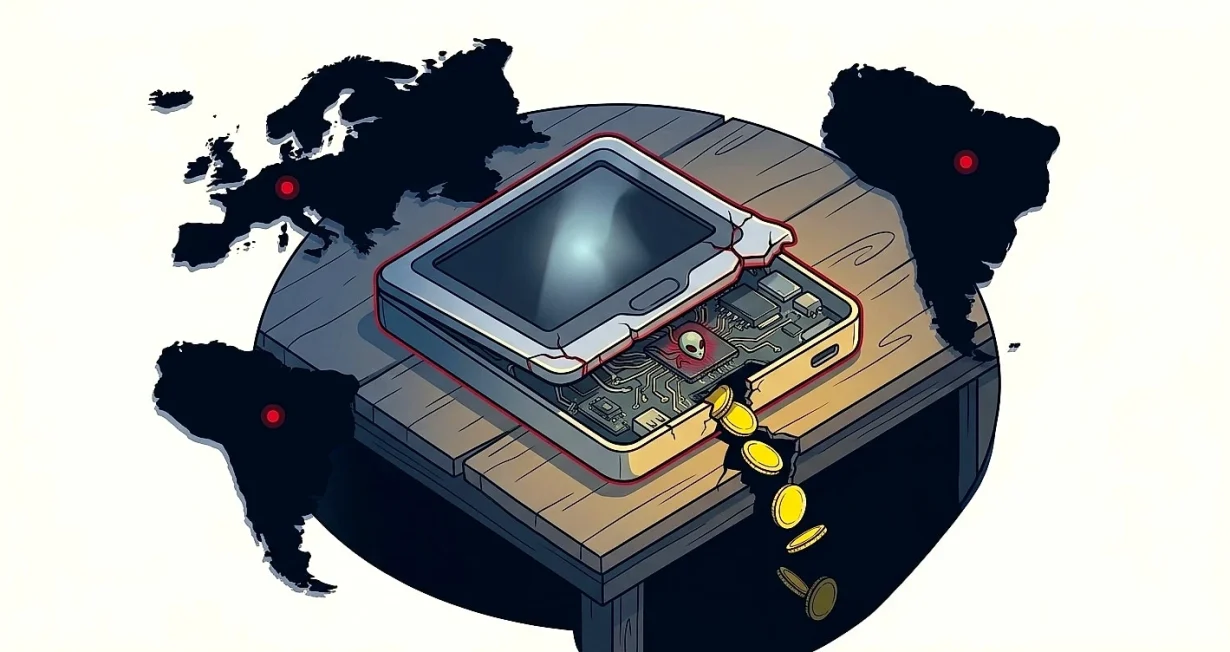
Former Mt. Gox CEO Mark Karpeles found the spy method by testing the devices. He said the implant can read screen output. That means it can record a seed phrase as you set up the wallet.
Worse, the implant can stay hidden from Ledger Genuine Check. That check is meant to prove a device is real. Here it did not catch the extra hardware.
Ledger confirmed yesterday that the Oct 9 incident hit a limited number of devices sold by CryptoBilis. The company said. “We are reminding our authorized resellers and distributors to source products only through authorized channels and never to restock returned products.”
New reports suggest the problem goes wider. A user called @0xJohannes_ said he opened a Ledger with a spy implant. He said he bought it in a store from official German reseller MediaMarkt.
That device did not seem to steal funds yet. The user wrote. “Either the device didn’t work or they were waiting for a more widespread usage of the comprised devices.” He also claimed. “there are reported cases in Asia, South America. Now Europe as well.”
Another user called @Us_Chan007 shared photos of the inside of his Ledger. He said he bought it from official Philippine reseller LazMall. Karpeles said that unit had an older style implant in the form of a manual coil antenna.
Karpeles also helped flag spyware in a Ledger Stax model shared by user @wentrre. That user had also bought from CryptoBilis. Karpeles warned, “Very much a problem! Move your assets as soon as possible from any seed that touched this device.”
Here’s the deal. This is not a software bug you can patch. This is someone opening the box, adding wires, and sealing it back up. The buyer sees a new device. The thief sees every letter on the screen.
Think of it like a bank card reader with a skimmer on top. The machine looks normal. The extra part copies your code. With Ledger, the extra part copies your seed phrase.
The seed phrase is the master key. Anyone with those words can take the coins from anywhere in the world. No password can stop them. No support ticket can undo it.
That is why Karpeles told people to move fast. If your seed ever showed on a spiked screen, assume it is no longer secret. Make a new seed on a clean device. Send funds to the new addresses.
Ledger stressed the CryptoBilis link. It pointed to sourcing and returned stock. The message to shops was blunt. Buy only through approved channels. Never put a returned unit back on the shelf.
But the new claims raise a hard question. What if spiked units also moved through other stores? The MediaMarkt claim and the LazMall claim both cite official resellers. Those claims are still user reports, not lab proof. Still, they widen the worry.
The Stax report adds to that worry. Stax is a newer model with a larger screen. If an implant can sit in that design too, buyers cannot judge safety by model alone. They have to judge safety by where they bought it.
For now, the confirmed loss center is CryptoBilis and over $86 million. The rest is smoke that needs checking. Smart buyers will treat smoke like fire until tests prove otherwise.
Why It Matters
This is a security event, not a price story. It hits trust in the safest part of crypto. Cold storage is where people park coins they do not want to lose.
When that trust cracks, behavior shifts fast. People move coins. They pause deposits. They question every device in a drawer. Fear spreads quicker than facts.
Token Metrics treats this as a custody trust story. Custody is the rail that holds everything else up. Stablecoins, payments, and trading all need safe keys. If keys leak at setup, no app on top can fix it.
The second-order effect is about the supply chain. A hardware wallet is only as clean as its path to you. Factory to shipper to store to home. One bad stop can poison the whole trip.
That path is hard for a buyer to check. The box can look sealed. The device can pass checks. The screen can turn on like normal. The spy part hides inside where most users never look.
So the real cost is not just $86 million. It is doubt. Doubt makes people delay self-custody. Doubt pushes coins back to exchanges. Doubt slows new money that wants a safe home.
There is also a split in who gets hurt. Big holders with clean buying habits face less risk. Small buyers who hunt for deals face more risk. Discount shops and second-hand units now look toxic.
Builders feel it too. Wallets, apps, and vault products all assume keys start secret. If that first step fails, later steps inherit the flaw. Audits do not help when the leak is a wire on a screen cable.
What would change the read? Clear lab tests showing the Europe and Asia units are false alarms. Or proof that all bad units trace to one batch from one shop. That would shrink the story back to CryptoBilis.
What would make it matter more? Proof that official store stock in Germany or the Philippines was spiked at scale. Or proof that Genuine Check cannot catch this class of implant at all. That would turn a reseller mess into a brand-wide fix.
Market Context
This fits the security bucket. It is about theft by tampering, not about rates or rules. Price action is noise next to key safety.
Hardware wallets sell one promise. Your keys never touch the internet. You sign deals offline. Hackers online cannot reach you. That promise still holds for clean devices.
The weak link here is physical. Someone touched the device before you did. They added a listener to the screen line. They did not need your password. They just needed five minutes with a screwdriver.
That is an old crime with a new target. Card skimmers did the same to ATMs. Fake readers sat on top of real ones. Users saw a normal slot. Thieves saw every swipe.
Crypto makes the payoff bigger. A bank skimmer gets one card at a time. A seed skimmer can get a full life savings in one setup. And crypto transfers do not reverse.
The timing adds heat. Losses of over $86 million in one week grab eyes. New photos from other lands keep the story alive. Each post tells holders to check their drawer.
Social posts now drive the scare cycle. One clear photo beats a long statement. Karpeles brings weight because he ran Mt. Gox. When he says move assets now, people listen.
Ledger faces a company event inside a security event. It must defend its check system. It must tighten its store network. It must show users how to tell clean from spiked.
Its current line is narrow. Limited number of devices. Sold by CryptoBilis. Source only through approved channels. Do not restock returns. That line works if the scope stays narrow.
If scope grows, the line must grow too. That could mean recalls, free swaps, or in-store checks. It could mean a new way to prove a device was never opened. Words alone will not calm holders.
For investors, the lens is risk, not price. Do not ask what this does to a token today. Ask where idle coins will sit tonight. Ask which custody path still earns trust.
Risks to Watch
The first risk is more drained wallets. Seeds copied weeks ago can be used today. Thieves often wait. They let balances grow. Then they sweep many at once.
Watch for fresh drain reports tied to CryptoBilis buys. Watch for drains tied to other shops. A second cluster outside Malaysia would prove wider spread.
The second risk is fake clean bills of health. Genuine Check may say pass on a spiked unit. Users may trust the green tick and keep funds in place. That false comfort is deadly.
Do not rely on software checks alone for now. Open-source photos help. Side-by-side board shots help. If your board has extra wires or coils, stop using it.
The third risk is bought-from-store doubt. MediaMarkt and LazMall are named in user posts. Those are claims, not proof. But claims can freeze buying even before proof lands.
If shoppers fear store stock, sales stall. If sales stall, second-hand deals rise. That would push more buyers toward the riskiest path at the worst time.
The fourth risk is copycat tampering. News of a working implant teaches other thieves. Returned units are an easy target. Open, spike, reseal, resell. Repeat.
Shops that restock returns invite this. Shoppers who save $20 on an open box invite this. The fix is dull but real. Never buy an opened hardware wallet.
The fifth risk is panic moves. Rushed transfers can send coins to wrong addresses. Rushed setups can expose new seeds to prying eyes or cameras. Fear can cause the loss it tries to stop.
Move fast but move clean. Use a known-good device. Set it up offline. Write the seed on paper. Never type it into a phone or laptop.
What to Watch Next
- Watch for Ledger lab results on the Germany and Philippines units. Clean test photos would calm fears. Confirmed implants would widen the recall talk.
- Watch for an updated reseller list and return policy. A public ban on restocking returns would help. Named audits of store stock would help more.
- Watch for drain trackers tied to CryptoBilis and @wentrre Stax reports. New sweeps would show thieves are still cashing old seeds.
- Watch for a new physical check guide from Ledger or Karpeles. Board photos and wire diagrams give users a real test. A software update alone will not settle this.
- Watch for exchange inflow spikes from self-custody wallets. A rush back to exchanges would show trust took a hit.
This is information only. It is not investment advice. Keep keys offline and verify where your device came from.