

TL;DR
Token Metrics data shows Bitcoin has flipped bearish with a Daily Pulse classification of lead change. Coinciding with a $1.3 billion IBIT dark pool sale that triggered immediate price decline. This massive trade represents the largest dark pool transaction observed by analysts and reflects growing institutional selling pressure through Bitcoin ETFs.
Context
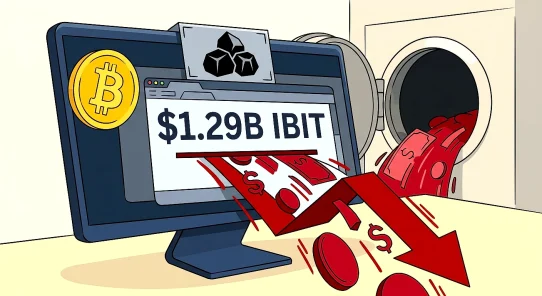
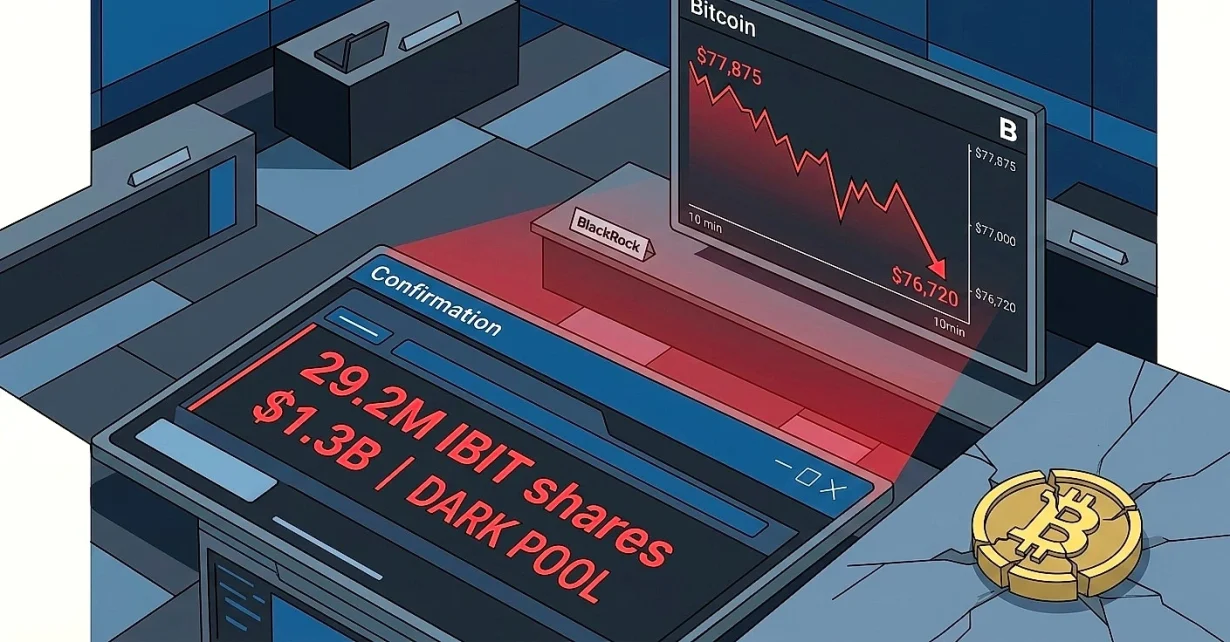
BlackRock’s iShares Bitcoin Trust ETF (IBIT) saw a massive trade that rattled the crypto market. An unknown trader dumped 29.2 million shares worth about $1.3 billion at 2:30 pm UTC on Tuesday. The trade happened on a dark pool, which is a private trading platform where institutions make big trades away from public eyes. These dark pools let institutions move large amounts of shares without causing immediate market panic or tipping off other traders.
The timing of this trade was particularly telling. Bitcoin had been trading around $77,875 right before the sale. Within 10 minutes of the trade, Bitcoin fell 1.5% to $76,720. The selling pressure continued through the day. Bitcoin eventually hit a 24-hour low of $75,600 about 12 hours later. That marked a 2.8% drop for the day, showing how sensitive the market has become to large institutional moves.
Alex Thorn from Galaxy Digital called it the biggest dark pool trade he has ever seen. Bloomberg ETF analyst Eric Balchunas noted the shares sold at $43.16 each. This single order was 22 times larger than the next biggest IBIT sell order that same day. The sheer size of this trade shows how much Bitcoin ETFs have changed the market dynamics.
Bitcoin used to trade mostly outside traditional markets. But US-based Bitcoin ETFs have removed barriers for institutional investors. Now Bitcoin often moves in step with US markets. This correlation means big institutional trades can have immediate effects on Bitcoin’s price, just like we saw with this IBIT sale.
The emergence of Bitcoin ETFs represents a fundamental shift in how the cryptocurrency trades. Previously, Bitcoin operated largely in its own world, with price discovery happening across various global exchanges. The introduction of regulated ETF products has drawn billions in institutional capital. Creating new pathways for large players to gain exposure without directly handling the underlying asset. This structural change means traditional market dynamics now directly influence Bitcoin’s price movements.
What Token Metrics Data Shows
Data as of May 27, 2026 shows Bitcoin trading near $75,600, down about 1.5% on the day and off almost 2% over the past week. The market cap sits around $1.5 trillion. Token Metrics technicals read bearish across the board. The trend has flipped bearish with momentum indicators confirming the shift. Bitcoin is trading sideways inside its recent range with momentum sitting weak but not yet stretched. Volatility is compressed at about 2%, suggesting the market isn’t pricing in another big move yet. First support sits near $72,600, with next resistance around $80,500.
Smart-money netflow shows institutional investors reducing exposure. The Daily Pulse coverage recognizes this as a lead change event, signaling its importance for market direction. The bearish technical setup combined with this massive institutional sale creates a tough environment for bulls right now. The token-market signal indicates increased selling pressure from large holders. Polymarket consensus shows traders pricing in further downside potential.
The technical indicators paint a concerning picture for Bitcoin bulls. The bearish trend bias suggests that selling pressure has taken control. Support levels are likely to be tested in the near term. The compressed volatility reading indicates that the market is in a consolidation phase. History shows that such periods often precede significant breakouts. With momentum weakening but not yet at oversold levels, there’s room for further downside before finding a sustainable bottom.
The market’s reaction to this dark pool sale demonstrates the new dynamics introduced by Bitcoin ETFs. Previously, a $1.3 billion trade would have been impossible to execute without significant slippage across multiple exchanges. Now, through ETF structures, institutions can move massive positions with minimal market impact until the trade is reported. This efficiency comes at the cost of transparency, as retail traders often learn about these institutional moves after the fact.
What’s New
The core news is the massive IBIT sale on a dark pool platform. This wasn’t a gradual selling by many small traders. One entity moved 29.2 million shares in a single transaction. The trade’s timing at 2:30 pm UTC suggests it was a calculated move, likely by an institutional player managing a large position. The immediate price impact shows how much weight these ETF flows now carry in the Bitcoin market.
Bitcoin ETFs have seen significant outflows recently, indicating institutional sentiment toward Bitcoin has weakened. This sustained selling pressure indicates investors are reducing their Bitcoin ETF exposure faster than new money is coming in. The fact that such a large trade occurred on a dark pool suggests institutions prefer to avoid public markets. They make significant position changes away from public view.
The institutional retreat isn’t limited to anonymous dark pool traders. Major financial firms have been adjusting their Bitcoin ETF positions. These aren’t small adjustments from retail traders. They represent strategic decisions by sophisticated financial firms responding to market conditions and portfolio rebalancing needs.
The dark pool sale represents a shift in how Bitcoin trades. ETFs have made Bitcoin accessible to institutions who can now move billions without touching spot markets. This $1.3 billion trade shows how quickly institutional sentiment can translate into price action. The fact that it happened on a dark pool means we might not see such moves coming in public order books.
What to Watch
• Watch for continued Bitcoin ETF outflows over the next few trading days. If the outflow trend extends, it could signal deeper institutional concerns about Bitcoin’s near-term prospects.
• Monitor dark pool activity for additional large block trades. Another billion-dollar sale could trigger another sharp price drop, especially if it comes during low-volume trading periods.
• Pay attention to Bitcoin’s ability to hold the $72,600 support level. A break below this level could accelerate selling pressure and trigger stop-loss orders across the market.
• Track institutional holdings reports from major banks and market makers. Further reductions could confirm the bearish trend and suggest more pain ahead for Bitcoin holders.
• Watch for any reversal in the bearish momentum indicators or a break above $80,500 resistance. This would indicate the selling pressure might be easing.
This analysis is for informational purposes only and does not constitute financial advice. Always do your own research before making investment decisions.